Bitcoin, Silk Road, and weird stuff going on at City AM
Alright… I have to catch up with a lot of things after a long and very busy weekend…
First thing, I’d like that all of you who mention the Silk Road story as a ‘defeat’ for the classical liberal/libertarian ideals and for the possibility of a laissez-faire monetary system to stop right now. This Silk Road story and illegal trade have nothing to do with free-markets. Nothing. Illegal trade, and crazy people, and murders, and crime, existed before any alternative currency appeared. Liberalism does not advocate some kind of Mad Max anarchism, but voluntary cooperation.
Bitcoin has its faults (and apparently some of them might involve loss of anonymity), and if it does not satisfy the requirements of its users, it will disappear and be replaced by another medium of exchange. People will learn, new media of exchange will perform better. It’s the essence of evolution under free-markets.
Following my last-week’s post, I found it ‘funny’ to find out that the British financial newspaper City AM had two days in row published comments that reminded mine… See here and here. Coincidence?
The case for stable rules
I argued in a previous post about macroprudential regulation that discretionary regulation (as well as monetary and any other policy) was not recommended. Let me elaborate on that.

Stable rules are a fundamental feature of intertemporal coordination between savers and borrowers, between investors and entrepreneurs. In order for economic agents to (more or less) accurately plan for the future, for entrepreneurs to develop their business ideas and anticipate future demand, for savers to invest their money and know that their property rights are not going to disappear overnight and accordingly plan their own delayed consumption and provide entrepreneurs with directly available funds, the economic system needs a stable and predictable rule framework. Production and investments take time and as a result involve uncertainty, which should not be exacerbated by an instable rule set. The rule of law is part of this framework. Monetary policy, financial regulation and government policies should follow the same pattern, instead of being discretionary.
Let’s take an example: most of you have probably played Monopoly. You know in advance what the rules, possibilities and limitations of the game are and you plan your strategy accordingly. Imagine that, from time to time, the rules changed, making most of your elaborated and well-developed strategy suddenly worthless. You had purchased a number of tactically-placed hotels and had only a couple more to buy for your strategy to succeed. All of a sudden, a newly-introduced rule not only prevents you from buying other hotels (jeopardising your strategy), but also implements a tax on all hotels in order to promote investment in smaller houses and railway stations. You are now at risk of bankruptcy. I guess you would then think twice (or three times, or four times) before investing in a new hotel (or anything else) next time you play. It is the same thing in real life.
But, you’re going to tell me that there are also unexpected events in real life, whether they are wars or natural disasters, which require exceptional micromanagement. It is indeed arguable that some micromanagement would help. But I would also answer that there are also unexpected events in Monopoly: the Chance and Community Chest cards. So both in the game and in life, economic agents then face a choice: they can plan for the future, taking into account unexpected events and keep aside some resources as an economic buffer for bad times, or they can try to maximise potential profits, hoping that no disaster will strike but taking on more risk. Society represents a combination of people whose behaviours are somewhere on this spectrum.
The fact that those unexpected events exist does not imply that policymakers should introduce even more uncertainty into the system. Unfortunately, most of them are over-confident in their ability to understand, control, foresee and anticipate events. What they don’t see is the unintended consequences of their actions, which can often worsen rather than alleviate a given situation.
It can be argued that bad rules are better than constantly changing ones. Of course, good and stable rules are even better. Don’t get me wrong though. I am not saying that rules are good per se. Rules often distort, disturb or prevent economic activity and freedom. But some rules and legal systems are necessary, to facilitate the enforcement of private contracts. Whether this system must be set up through government monopoly or through private cooperation is another topic. What I am saying is that all else being equal, stable rules are the way to go.
The concept of ‘regime uncertainty’, invented by Robert Higgs, illustrates remarkably well what I am trying to show. It also particularly applies to nowadays’ financial regulation. Multiple constantly-changing rules across many jurisdictions affect financial institutions’ behaviour: risk is to be avoided as much as possible.
The world is uncertain enough as it is. A stable institutional framework is necessary for trust to build up within the system. And trust is the foundation of prosperity.
Photograph: Intermonk
The French government does not like crowdfunding
While most of the world is trying to move forward and away from the traditional banking sector, France tries its best to prevent financial innovation from annoying its politically-connected large banks. This is not welcome. But this follows a particular historical pattern. France has always been late in the race for financial innovation. This is originally due to the story of John Law and the Mississippi Company (later Compagnie d’Occident, later Compagnie Perpetuelle des Indes), which made anything financial-related suspicious and delayed the country’s financial development by around a 100 years.
Today, most countries, and in particular the US, the UK and emerging markets in Africa or Asia are trying to give a boost to the latest financial innovations around: crowdfunding, peer-to-peer lending, mobile banking… They hope that it would bolster lending to offset the effects of a depressed banking system (insolvency, regulation, regulation, regulation, regulation…).
Not in France. While BarcampBank (an ‘unconference’ for financial innovators) attendees have been talking about the difficulties of creating anything financial in France for a while, it recently looked like things were improving.
It looked too good to be true. The French government now wants to limit the amount invested to….. EUR250 per person per project. Yes. 250 euros. This is very likely to attract investors as you can guess… Projects will also be limited to EUR300k. It’s obviously not very big, especially in light of the projects available on some American and British platforms. The French government justifies this move by preventing individuals from taking on too much risk. Thank you dad.
Another, unofficial reason is that this type of financing will increasingly challenge banks’ savings and lending offers, probably within the next 15 years. French banks’ executives and French politicians are very connected: they often studied together, and many former civil servants work for French banks (and vice-versa). Crony capitalism is still the norm in the country.
Meanwhile, in the US, peer-to-peer lenders keep developing their business by now issuing securitisation…with the support of all large Wall Street banks. Another world, I’m telling you.
RWAs and Scott Sumner on banks
The FT yesterday published a new article on ‘manic regulation’. It comes as a relatively nice surprise given the tone of most of the articles recently. The FT reminds us that in 1980 there was one regulator for 11000 financial workers in the UK, in 2011, one for 300, that Basel 1 was 30 pages-long, and Basel 3 1000. It pleasantly questions whether the excessive regulation put in place at the moment would prevent another financial crisis. Its answer: “History suggests not”.
Something I particularly liked: “The worst thing about the new regime is that the whole system of risk-weights is a nonsense.” I really have to get back to RWAs in a post soon. In my opinion, it is an abomination of financial regulation that needs to be scrapped.
Scott Sumner reiterated his “banks don’t matter” claim. For those who don’t know him, he is the Market Monetarism guru, a new school of thought insisting that a central bank stabilising the growth of nominal GDP by monetary policy would prevent or reduce most crises. Business Insider called him “the blogger who may have just saved the American economy”… Scott and I are both pretty close and pretty far ideologically speaking. He is a classical liberal disliking most government interventions. And while we agree on most subjects, we won’t really agree on monetary policy and banking ones as we have differing economic worldviews. I do agree with him that NGDP targeting would be an improvement on our current monetary policy framework though.
So here Scott claims (in line with his worldview and what he already declared) that the banking system doesn’t matter in order to maintain the economy stable. He doesn’t want to include banks in macro-economic models (I think they are often quite useless anyway…). I don’t agree with him, as you can see from my comments, and from my exchange with two other economic bloggers, Nick Rowe and JP Koning. My point of view is that, in the real world, banks play the role of intermediaries without which the central bank would struggle to influence anything through monetary policy.
The regulatory regime runs against the concept of individual responsibility
Is it from me? No, it’s from the president of the Bundesbank! He wrote a nice piece for the FT. And, what a surprise, he’s basically saying the same thing about risk-weighted assets and regulation as I do. Ok, in a different way. He criticises the fact that some banks over-invest in government bonds because of…favourable regulatory treatment, including very low (or nil) RWAs, possibly leading to instability. Reminds me of something…
How increasing banks’ capital reduces lending
This is a controversial topic. Since the beginning of the financial crisis, there hasn’t been a single week without someone calling for increased banks’ capitalisation. What does it mean in practice?
Banks fund their loans and investments through several main channels: customer deposits (retail and corporate), interbank deposits, short and long-term wholesale borrowings, and equity. Equity represents around 3 to 7% of banks’ funding structure in developed-markets, i.e. equity funds 3 to 7% of the bank’s loans and investments. This has led many to say that banks are ‘over-leveraged’, as the rest of the funding structure is effectively debt, under one form or another. Under current and future Basel 3 rules, banks are also allowed to count some form of loss-absorbing hybrid debt and preference shares as complementary capital, on top of shareholders’ equity. This ‘Tier 1’ capital should reach 6% of risk-weighted assets (not of total assets, see my previous post) by 2019 (up from 4.5% previously).
Many people think it is not enough. In the UK, Sir John Vickers proposed that equity should fund 20% of the banks RWAs (up from the 10% he recommended with his Independent Commission on Banking). In the US, calls for higher capital requirements are also very common (see here, here, here). Most of them point to the fact that banks’ equity level used to be much higher in the past than it is now. I’ll come back to this claim and many others on capital in another post.

Today I only want to address the main claim backing the ‘more equity is always better’ argument: that increasing equity (or more generally, regulatory capital) does not negatively impact the banking sector’s lending ability. Research by Anat Admati and Martin Hellwig has provided the main intellectual foundation to proponents of increased capital requirements (see also their now famous book, The Bankers’ New Clothes, which has received positive comments from regulators and most of the financial media, and which I’ve read and will try to review when I have the time). Their argument about capitalisation looks convincing and has not really been challenged so far on theoretical grounds: capital does not represent money set aside for safety which could otherwise be used to lend, as some foolish bankers would like us to believe. Why? Because equity is also already used to lend. Therefore, we can increase equity and lending will not be constrained as a result. They are right (as highlighted at the beginning of my post). However, they are also wrong.
Let me take a very simple financial system, only comprising banks as financial intermediaries. Here are my assumptions:
– High-powered money supply (money base) M0 is fixed and there is no physical cash
– M1: money supply following deposit expansion through the money multiplier
– Reserve requirements (RR): 10% of deposits (even though in most developed countries this figure is closer to 1 or 2% or even non-existent nowadays)
Before considering two different scenarios, let’s remember that we live in a fractional reserve banking world. When you deposit money in a bank, the bank lends out a portion of it to other people (or invests it in securities). Effectively, the bank never has all of its depositors’ money at the same time. However, deposits are still considered as part of the money supply. Why? Think about your own reaction when you put money in a bank: you consider money as yours and redeemable on demand. So you hold your physical cash balances at a minimum, considering that you can go get the rest of your money whenever you want anyway. And your consumption pattern reflects your whole money holding (cash on hand and deposits), not only the cash that you have in your wallet.
As a result the money multiplier applies, according to reserve requirements. What is it? In such a system, banks can effectively lend out multiple times the funds that have originally been deposited, as long as they keep enough of them to satisfy daily withdrawal. As such, banks create money (through new deposits). In a world with 10% reserve requirements, the money multiplier is 1/RR = 1/0.1 = 10, meaning the banking system can potentially multiply the original deposit base up to 10 times through lending.
This is where things differ regarding equity. Equity is not a deposit. It is not subject to reserve requirements (and hence to the money multiplier). Once you’ve invested in a bank’s equity, you don’t consider this money as yours anymore (you only have a claim on it that cannot be used for anything else). The only thing you can do is sell your stake at some point in the future to generate cash. As such, equity funding is a kind of 100%-reserve banking system, i.e. equity transfers money instead of creating it. A banking system 100%-funded through equity would be similar to a 100%-reserve banking system, with banks essentially becoming some sort of mutual funds (and deposits not being used at all for investments).
Alright. Now let’s now see what happens if banks’ capital requirements is 10% of their assets. Ex-post, after applying the deposit multiplier (when the system if ‘fully loaded’), M1 should be comprised of 10% of equity and 90% of deposits. Consequently, to figure out the original ability of the system to lend and create extra-deposit, we need to work backward in order to find out the ex-ante money supply structure. Rebasing the 10%/90% M1 structure gives a 53%/47% M0 structure after dividing the deposit base by the deposit multiplier, equivalent to M0 = 19% of M1. It also means that the system’s fully-loaded state (M1, after monetary expansion through fractional reserve lending) represents 526% of the original money supply M0.
What if banks’ capital requirements are raised to 20% of their assets? Ex-post, after applying the deposit multiplier, M1 should be comprised of 20% of equity and 80% of deposits. The 20%/80% M1 structure gives a 71%/29% M0 structure once divided by the deposit multiplier, equivalent to M0 = 28% of M1. It also means that the fully-loaded state (M1) represents 357% of the original money supply M0.
Clearly, increasing capital requirements led to a lower potential money supply as banks were not able to lend as much as before as a larger part of the money supply was not subject to fractional reserves anymore. Admittedly, this is a very simple scenario that might not accurately reflect the effects of the various near-moneys and injection of reserves by central banks of the real world. However, it does show that Admati and Hellwig’s claim is not that simple and straightforward. They also never explain how capital requirements can be smoothly increased. In real life, the transition process can be quite painful as we witness every day at the moment (banks cutting lending in order not to issue new equity, etc).
Don’t get me wrong though. I am in favour of banks holding more equity. But I don’t want to force them to do so. There are various historical reasons that explain why equity as a percentage of assets is low nowadays, and most of them are due to….the influence of government’s policies. Surprising heh?
Macro(un)prudential regulation
From a free-market perspective, one can only be against macroprudential regulation. Macroprudential regulation is the new fashion among regulators and other policy-makers. It’s trendy, and I understand why: it sounds clever enough to impress friends during a night out. It aims at monitoring a few macroeconomic indicators in order to try to ‘cool’ the system if it seems to be overheating. Those tools are supposed to be countercyclicals: if the economic environment is good, regulators can force the whole banking system to start accumulating extra equity or liquid assets for example, or decide to cap the amount that all banks can lend to mortgage borrowers. As you can guess, it is not the kind of self-regulating financial system I particularly appreciate.
This is once again a typical example of trying to fix the symptoms created by the system’s defects, without touching those defects. Wrong monetary policy? Bad government policies and subsidies? Of course not, the financial system is inherently bad and fragile, regulators and politicians said. Well, to be fair, this is their job and how they make money.
Lars Christensen, chief analyst at Danske Bank and author of The Market Monetarist blog, had a couple of niece pieces against macroprudential regulation recently. In the first one, he quotes and agrees with a recent WSJ article by John Cochrane, financial economist at the University of Chicago (also available on his blog):
This is Cochrane:
Interest rates make the headlines, but the Federal Reserve’s most important role is going to be the gargantuan systemic financial regulator. The really big question is whether and how the Fed will pursue a “macroprudential” policy. This is the emerging notion that central banks should intensively monitor the whole financial system and actively intervene in a broad range of markets toward a wide range of goals including financial and economic stability.
For example, the Fed is urged to spot developing “bubbles,” “speculative excesses” and “overheated” markets, and then stop them—as Fed Governor Sarah Bloom Raskin explained in a speech last month, by “restraining financial institutions from excessively extending credit.” How? “Some of the significant regulatory tools for addressing asset bubbles—both those in widespread use and those on the frontier of regulatory thought—are capital regulation, liquidity regulation, regulation of margins and haircuts in securities funding transactions, and restrictions on credit underwriting.”
This is not traditional regulation—stable, predictable rules that financial institutions live by to reduce the chance and severity of financial crises. It is active, discretionary micromanagement of the whole financial system. A firm’s managers may follow all the rules but still be told how to conduct their business, whenever the Fed thinks the firm’s customers are contributing to booms or busts the Fed disapproves of.
I completely agree with Cochrane.
And I completely agree with both of them. Christensen argues that the central bank’s goal is to provide nominal stability – to have a single target and stick to it, but that macroprudential regulation would involve manipulating many different tools having opposite effects, with likely unintended consequences. He then goes on to argue that if “markets are often wrong”, central banks are even worse and “have a lousy track record” at spotting bubbles.
Another important point made by Cochrane in my opinion is:
Third lesson: Limited power is the price of political independence. Once the Fed manipulates prices and credit flows throughout the financial system, it will be whipsawed by interest groups and their representatives.
= crony capitalism. This has plagued all corners of our capitalist system for ages, and when things turn bad, free markets/laissez-faire capitalism/liberalism/neoliberalism/ultra turboliberalism/add the one you want is blamed… Go figure.
Christensen’s second post, published a few days ago, refers to a Bloomberg article on the so-called ability of a new Finnish model to ‘forecast’ all cyclical up and downswings in the US over the past 140 years… He helpfully remembers that nobody is ever able to constantly beat the market. While this sounds like a rational expectations/efficient market hypothesis point of view (I don’t know what Lars actually believes in), I do agree with him (and no I don’t believe in rational expectations, but constantly beating the market requires non-human skills and information-gathering abilities). He then goes on to say that while this is relatively basic economics, “nowadays central bankers increasingly think they can beat the markets. This is at the core of macroprudential thinking.”
Obviously, the whole thing rests on the myth that the financial system is fragile and must be ‘safeguarded’ or ‘protected’ (see this IMF article) by ‘benevolent dictators’, in Christensen’s words. I would also add that macroprudential ideas are now new and have been already tried one way or another since the early 19th century (but how many regulators and economists remember that? See an example here).
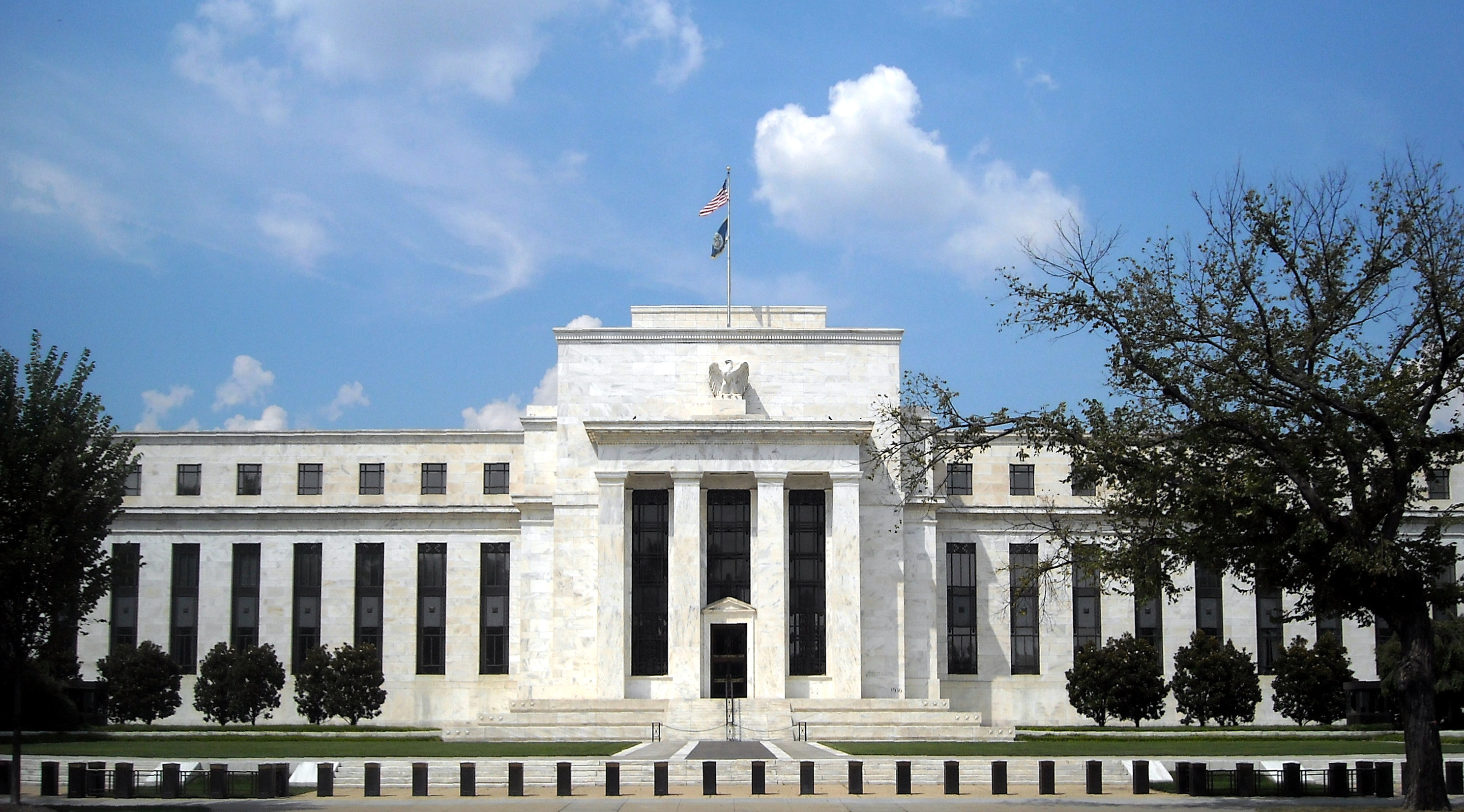
This is how I see things: no central body can ever have perfect knowledge of what’s happening in the economy and what the various plans, wishes and wants of the millions of actors in the system are (I am obviously not the first one to say this. See Mises, Hayek, Friedman and so many others). As a result, any central intervention is bound to fail or create distortions in the economic landscape.
Central banks are a monopoly: they define nominal interest rates and base money supply unilaterally and can only adjust their policies with a time lag, after they have already affected the economy. A distorting monetary policy can easily kickstart asset bubbles: an increasing supply of ‘high-powered’ money (base money) not matched by an increase in the demand for money can easily lead to excess credit creation. If real estate prices boom due to the flow of credit towards the sector, is it reasonable to try to stop it? The flow of credit is already here, and if it cannot go where it wanted in the first place, it will find another place to go to. China and its wealth management products is a good example of this process.
Let’s consider a current example in the UK. Due to a combination of interest rates maintained too low for too long, misguided government schemes such as Funding for Lending and Help to Buy, compounded by Basel regulations that favour mortgage lending and local restrictions on housing supply, if ever a housing bubble appears, the solution will be to… blame the banks and artificially restrict LTVs or cap lending??? Right…
Finance is a spontaneous process: people can be very innovative at finding ways of bypassing restrictions to achieve their desired financing and saving goals. Macroprudential controls would only move the problem from one sector to another, without correcting its very source. Macroprudential regulation would also introduce an unwelcome dose of discretionary rules and micromanagement, which have destabilising effects on trust, markets and economic actors.
Photograph: Wikipedia
Matthew Klein is drawing the wrong lessons on private currencies
Matthew C. Klein is a columnist for Bloomberg. He used to write on The Economist’s economic blog, Free Exchange. Despite not agreeing with him most of the times, I found that he had some of the most provocative and interesting pieces among the usually quite dull Economist posts. And I used to comment on those pieces. A lot.
He today published a new piece on the Bloomberg website, arguing that the ‘devaluation’ of US-based Southwest Airlines’ frequent flier reward points explains why private currencies (including free banking, Bitcoin and equivalents) have never taken off: they have unstable and unpredictable purchasing power.
His argument is really misguided. Let me explain why.
- First, I would not really call reward points currency. They are media of exchange of very limited use. They are definitely not generally accepted media of exchange (to be honest, Bitcoins aren’t either, as George Selgin explains).
- Bitcoins cannot even lose purchasing power unpredictably: its algorithm has been defined so that new Bitcoins are created following a very steady pattern. So I don’t see why Klein even mentions them…
- Matthew Klein seems to have limited knowledge of banking history: free banking systems have been very stable where and when they existed (White, Selgin, Dowd, Horwitz, and others have published enough on the topic). It is the state that monopolised currency issuance for its own benefits which very often led to financial crises. Currency depreciation has also been much more acute under government’s fiat currency systems.
- Finally – and this is where Klein’s argument really breaks down, the Southwest frequent-flier points devaluation is linked to the devaluation of the dollar! How? Like free banks’ private currency issuance is based on outside money reserve (usually gold or some other commodities), frequent-flier points are also based on another type of outside money (here, the US Dollar) although the analogy is not exact. Basically, every time a customer pays X USD to Southwest, Southwest generates Y reward points. As a result, there is an ex-ante Y/X exchange rate, which is supposed to remain constant over time. Issuing those points is a cost for the company, but which is offset by the potential profit of keeping loyal customers, at this specific exchange rate. When enough reward points have been accumulated, they can then be exchanged for a flight (which are priced in terms of both USD and reward points separately). While Southwest does control the reward points supply, it does not control the outside money supply. And unfortunately, the USD is slowly depreciating thanks to the Fed, thereby increasing the ex-post Y/X exchange rate and the relative purchasing power of the reward points… Like any price, reward points-based prices are sticky, and have to be revaluated over time to reflect the change in the medium of account (which is also USD) that Southwest uses to report its profits. It looks like in this case that reward points-based prices are stickier than USD-based prices, making devaluations both less frequent and sharper in order to catch up with the depreciation of their underlying outside money.
This phenomenon isn’t isolated. My internet monthly bill was recently increased by….25%! I was shocked for a few minutes when I found out. But it is easily explained: internet bills aren’t revaluated every month or even every year, despite the fact that inflation depreciates the currency’s purchasing power every month. At some point, internet firms have to readjust the prices that they charge in order to respond to the increase in their own supply costs and maintain their margins. And when it happens, increases are usually big. This is also valid for many other goods.
So Matt, you’re going to have to find another argument to justify government-controlled currencies!
News of Regulatory Capital importance
The European Banking Authority today published its new Basel 3 monitoring exercise of European Banks. For those of you who don’t know what Basel 3 is, it is the latest iteration of the global banking guidelines defined in Basel, Switzerland, which roughly covers minimum capital, liquidity and funding requirements that banks have to achieve by 2019. I’ll come back to the details in another post.

There is some partially good news. European banks seem to become more capitalised and more liquid. I have doubts regarding the process though, and I am not even questioning the centralised decision-taking in Basel, which I am evidently against. I am also against undercapitalised banks, but for other reasons.
No, what ‘worries’ me is the method that regulators used to push banks to recapitalise. The Basel accord asked banks to achieve balance sheet targets by 2019. Then came the EBA and other national regulators, who ‘stress-tested’ banks and almost publicly shamed them if they failed the tests. Now, the EBA proudly announces that pretty much all European banks will achieve capital and liquidity targets (“fully loaded Core Equity Tier 1 capital ratio”, “Liquidity Coverage ratio”…) five years ahead of schedule.
Hold on… Why even come up with a 2019 deadline in the first place then? The consequence of this is that banks have been under massive pressure to quickly ‘recapitalise’ in the middle of a European economic crisis, instead of doing it more progressively. This certainly did not help economic recovery, and we can also question the quality of the capital ratios achieved as a result.
Why? Many banks have tried to bolster their regulatory capital ratio and their liquidity by… reducing their balance sheet. Meaning? They decided to reduce lending, maintaining their capital base stable (or even declining!). Moreover, many banks are also playing with risk-weighted assets (RWAs). RWAs allow banks to apply a “weight” on a specific asset class according to the perceived risk of this class. For example, US debt is judged as risk-free and hence will carry a 0% weight, thereby allowing the bank to hold no capital against it to absorb potential losses.
Regulatory capital ratios are calculated this way: regulatory capital/RWAs. Regulatory capital comprises equity and “supplementary hybrid capital”, which lies in between equity and debt. The ratio is flawed: hybrid capital often does not adequately absorb losses and banks have an incentive to ‘arrange’ RWAs (lowering them to artificially increase the ratio). It happens frequently and I’ll get back to that another day. A clue to the fact that banks’ capitalisation might not be that good is the Basel 3 Leverage ratio. While we can criticise this leverage ratio on methodological grounds, it uses total assets and not RWAs on the denominator. Well, guess what? This ratio has not changed since the latest EBA review…
Another ‘good’ news, HSBC will hire 3000 more compliance staff this year, following a similar move by JPMorgan. Surely this is good news as it creates jobs? Not really. HSBC already employs 2000 compliance officers. Hiring so many people to deal with red tape instead of working in more productive activities represents a big economic loss.
The City of London, yesterday

I have a nice view from my office, so I’ll upload pictures of London from time to time.
 Spontaneous Finance
Recent Comments