Financial innovation is back with a vengeance
What didn’t we hear about financial innovation throughout the crisis? Whereas innovation in general is good, financial innovation on the other hand was the worst possible thing coming out of a human mind. Paul Volcker, former Chairman of the Fed, famously declared that the ATM was the only useful financial innovation since the 1980s. Harsh.
True, some financial innovations are better than others. In particular, those used to bypass regulatory restrictions are more dangerous, not because they are intrinsically evil or anything, but simply because their often complex legal structure makes them opaque and difficult for external analysts and investors to analyse. This famous 2010 Fed paper attempted to map the shadow banking system (see picture), and usefully stated that not all shadow banking (and financial innovations) activities were dangerous (but those specifically designed to avoid regulations were). Ironically (and typically…) one of the first innovations to ever appear within the shadow banking system was money market funds. What was the rationale behind their creation? In the 1960s and 1970s in the US, interest payment on bank demand deposits was prohibited and capped on other types of deposits. The resulting financial repression through high inflation pushed financial innovators to come up with a way of bypassing the rule: money market funds became a deposit-equivalent that paid higher interests. Today we blame money market funds for being responsible for a quiet run on banks during the crisis, precipitating their fall. It would just be good to remember that without such stupid regulation in the first place, money market funds might have never existed…

The last decade has seen the growth of two particularly interesting innovations within the shadow banking system: one was relatively hidden (securitisation) while the other one grew in the spotlight (crowdfunding/peer-to-peer lending). One was deemed dangerous. The other one was more than welcome (ok, not in France). What had to happen happened: they are now combining their strength.
Various types of crowdfunding exist: equity crowdfunding, P2P lending, project financing… Today I’m going to focus on P2P lending only. What started as platforms enabling individuals to lend to other individuals are now turning into massive gates for complex institutional investors to lend to individuals and SMEs. Given the retreat of banks from the SME market (thank you Basel), various institutional investors (mutual and hedge funds, insurance firms) thought about diversifying their investments (and maximising their returns) by starting to offer loans to individuals and companies they normally can’t reach.
Basically, those funds had a few options: developing the capabilities to directly lend to those customers, investing in securitised portfolios of bank loans, or investing in securitised portfolios of P2P loans. The first option was very complex to implement and the required infrastructure would take a long time to develop. The second option had already existed for a little while, but was dependent on banks lending to customers, which current regulations limit due to higher capital requirements on such loans. The third option, on the other hand, allowed funds to maximise returns and attract more potential borrowers thanks to the reduction of the cost of borrowing by disintermediating banks. And funds could also strike deals with those still tiny online platforms that would have never happened with massive banks.
While securitisation sounds scary, it is actually only a simpler way of investing in loans of small sizes (the alternative being to invest in every single loan, some of them amounting to only USD500… Not only many funds don’t have the capability of doing such things, but many have also restrictions about the types of asset class and amounts they can invest in). Securitisation also bypasses Wall Street investment banks: funds directly invest in P2P loans, package them and sell them on to other investors while retaining a ‘tranche’ in the deal, which absorbs losses first. Now some entrepreneurs are even talking of setting up secondary markets to trade investments in loans, pretty much like a smaller version of the bond market.
Is this a welcome evolution for the P2P industry? I would say that it is a necessary evolution. It is once again a spontaneous development that merely reflects the need for funding of the P2P industry, which small retail investors cannot fulfil (unless all investment funds’ customers start withdrawing their money to directly invest in P2P, which is highly unlikely). Many start to think that large institutional investors will end up crowding out small retail investors. Possibly, but as long as regulation remains light, keeping barriers to entry low, new platforms only accepting retail investors could well appear if the demand is present.
All this is fascinating. Not only because technology and the internet enables new ways of channelling funds from savers to borrowers, but also because this is the growth of a parallel 100%-reserve banking system. The shadow banking system is effectively some version of a 100%-reserve banking. And it keeps growing through those various innovations. As I argued in a previous post, this may well have implications for monetary policy that current central banks and economists don’t take into account. A 100%-reserve banking system does not have a deposit multiplier and consequently does not have an elastic currency to respond to a sudden increase or decrease in the demand for money. However, such a system perfectly matches savers’ and borrowers’ intertemporal preferences, limiting malinvestments. Nonetheless, we for now remain in a mix system of 100% reserve (most of shadow banking) and fractional reserves (traditional banking). It would still be interesting to study the possible policy implications of a growth in the 100%-reserve part of the economy.
Quick update on recent news: John Kay, hedge funds and house prices control
John Kay wrote an interesting piece in the FT yesterday saying that finance should be treated like fast food to secure stability. I can’t agree more. A nice quote:
Still, would it not be better if proper supervision ensured that no financial institution could ever get into a mess like Northern Rock or Lehman – or Royal Bank of Scotland or Citigroup or AIG? No, it would not. Just replace “financial institution” with “fast-food outlet” or “supermarket” or “carmaker” in that sentence to see how peculiar is the suggestion.
I know what you’re going to say: “but banks are different!” To which I would reply: no, they aren’t. It is treating them as different that makes them different.
Another nice one:
We have experience of structures in which committees in Moscow or Washington take the place of the market in determining the criteria by which a well-run organisation should be judged, and that experience is not encouraging. The truth is that in a constantly changing environment nobody really knows how organisations should best be run, and it is through trial and error that we find out.
I am a little surprised though, as I have the impression that John Kay is kind of contradicting himself (see his post from June in which he seems to say that banking reforms are going the right direction).
Another piece highlighted how much regulation is changing the hedge fund industry. What’s going on is that regulation is now limiting new entrants in the market as they can’t cope with booming compliance costs. This results in the largest hedge funds experiencing most of new money inflow from investors. Is this a problem? Yes. First, small hedge funds have traditionally outperformed large and established ones on average. So preventing them from entering the market reduces market and economic efficiency: proper allocation of capital to where it would be the most profitable does not happen as a result (and consequently, returns to investors are lower). Second, and more worrying, is that regulation is now replicating what has happened in the banking industry: it’s creating too big to fail hedge funds (and nobody seems to remember LTCM). Well done guys.
Finally for today, echoing my earlier post, a BoE member thinks that it is not the role of the central bank to control house prices. I certainly agree.
Spontaneous finance at work
The FT reported today that non-bank lending to SMEs was at its highest level since 2008 in the UK, whereas bank lending had been declining constantly since the start of the crisis, despite politicians’ and central bankers’ actions to revive it (such as the BoE’s Funding for Lending Scheme).

What kind of non-bank lending are we talking about? Personally, I would call this ‘shadow banks lending’, even though some other economists and analysts may have a different definition of shadow banking. To me, it comprises the less-regulated non-bank entities, from hedge funds to peer-to-peer lending platforms.
This is spontaneous finance at work: while the bloated, politically connected and over-regulated banking system does not seem to be able to channel resources (private savings) to smaller-than-large corporations, private actors, from investment funds to private individuals, step in to respond to their funding needs. This phenomenon has two sources: banks’ lending rates are often too high (blame regulatory capital requirements) and banks’ offered savings rate too low (blame too high inflation vs. BoE rate). And blame banks’ too high operating costs for both. As a result, there is a mismatch between what savers expect and what companies expect.
The solution? Bypass banks. Various investment companies (from hedge funds to more traditional mutual funds) are now setting up funds to gather savings and lend directly to companies that need them. Peer-to-peer and crowdfunding platforms basically act the same way by disintermediating all financial institutions: individuals directly lend to other individuals or firms. We also now see funds investing through P2P platforms (reversing the disintermediation process). Through those shadow banking channels, both savers and borrowers get better rates than they would do at a bank. At the time of my writing, savers can earn from 4% to 7% on their savings (even some hedge funds would love to get such steady returns). Rates vary for borrowers, but are on average lower than that of banks.
Lending volume is still pretty small as the wider public isn’t yet aware of those funding opportunities. In the UK, Funding Circle has only lent slightly less than GBP170m so far to small businesses (this compares to banks’ SME lending which stands at around GBP170…bn). But it’s growing quickly: it was only launched in 2010. Moreover, other shadow banks had lent around GBP17bn as of June (yes, a lot of 17 something, just a coincidence).
As this City AM article highlighted today, as usual, the main risk to those financial innovations is over-regulation, preventing their development and potentially leading to the creation of much riskier and opaque financial products. Regulators wish to ‘protect’ savers. I argue that savers do not need to be protected: they need to learn to invest responsibly and to understand the risks involved. Protection distorts risk-taking and capital allocation.
More worrying is the fact that some peer-to-peer industry actors are now even lobbying to be regulated… They claim that regulation will reassure potential investors. I claim that regulation will mainly protect the established firms by making it more difficult for new competitors to enter the market and offer competitive products to savers and borrowers. A brand new financial system is building before our eyes. It is important not to repeat mistakes that led to our current ineffective banking system.
Photograph: govopps.co.uk
Andy Haldane has a few lessons to teach Adair Turner
Andy Haldane, the Executive Director of Financial Stability at the Bank of England, is possibly one of the most knowledgeable top regulators around. Not only knowledgeable actually. Also modest. What I like in him is that he knows what he doesn’t know. He is the representative of common sense among regulators; it’s almost a pleasure to listen to him. To me, the contrast is sharp between Haldane and Lord Adair Turner, who should probably learn a thing or two from him.

In another (long) remarkable speech given at the Kansas City Fed on 31 August (sorry, I’m only catching up with that now) called ‘The dog and the frisbee‘, he demonstrates again his immense knowledge and modesty. He argues that, often, simple and straightforward rules are much more effective than complex and adaptive rules. Of course, what he targets here is the increasingly large Basel regulatory framework and the risk-weighted assets-based regulatory capital ratios. He many times cites research highlighting how unweighted measures performed better in spotting institutions at risk of collapse.
He based his opinion on his economic beliefs. He and I both disagree with the rational expectations hypothesis, which underlines most modern mainstream economic and finance theory. Financial theory is dominated by the ‘modern portfolio theory’, from which is derived some of the most basic financial tools (Capital Asset Pricing Model for example). I’ll get back to this in another post but the assumptions underlying CAPM/cost of capital and modern portfolio theory in general are highly unrealistic. Yet, few practitioners seem to care. Mathematics has taken over as the only way to describe the world and invest. It looks scientific. So it looks good and must be real.
A crucial point he mentions is that economic agents’ knowledge is limited and imperfect, and that the marginal cost of gathering further data may well outweigh the marginal benefit we get from this supplementary data. Even if all possible information could be gathered, cognitive abilities are limited and we may not be able to accurately process it. Finally, even if we could process it, data changes all the time and our conclusion could already be invalidated when released. This reminds me of some of the arguments developed by Mises and Hayek in the economic calculation problem in a socialist society. Indeed, central regulation of the banking sector effectively equates to partial central planning of the economic system.
Haldane also describes how modern risk-management models have to deal with several million parameters in order to assess various banking and trading risks and accordingly apply risk-weights to calculate regulatory capital ratios. The problem, he says, is that the pre-crisis way of thinking (both from a regulatory and an economic points of view) hasn’t changed: mathematical models have failed so what is needed is even more complex mathematics…
I don’t agree with everything Haldane says though. I don’t see the need to tax complexity or the even simple need for a regulatory leverage ratio for example. Moreover, Haldane himself admitted that both during the Great Depression and during the Great Recession, “the market was leading where regulators had feared to tread”, as banks took corrective measures to reassure investors. So if markets take the necessary measure by themselves and regulators can’t spot crises, why even have them in the first place?
Here are a few selected quotes:
- “No regulator had the foresight to predict the financial crisis, although some have since exhibited supernatural powers of hindsight.”
- “For what this paper explores is why the type of complex regulation developed over recent decades might not just be costly and cumbersome but sub-optimal for crisis control. In financial regulation, less may be more.”
- “Take decision-making in a complex environment. With risk and rational expectations, the optimal response to complexity is typically a fully state-contingent rule. Under risk, policy should respond to every raindrop; it is fine-tuned. Under uncertainty, that logic is reversed. Complex environments often instead call for simple decision rules. That is because these rules are more robust to ignorance. Under uncertainty, policy may only respond to every thunderstorm; it is coarse-tuned.”
- “The general message here is that the more complex the environment, the greater the perils of complex control. The optimal response to a complex environment is often not a fully state-contingent rule. Rather, it is to simplify and streamline.”
- “Strategies that simplify, or perhaps even ignore, statistical weights may be preferable. The simplest imaginable such scheme would be equal-weighting or “tallying”. In complex environments, tallying strategies have been found to be superior to risk-weighted alternatives. “
- “Complex rules may cause people to manage to the rules, for fear of falling foul of them. They may induce people to act defensively, focussing on the small print at the expense of the bigger picture.”
- “Of course, simple rules are not costless. They place a heavy reliance on the judgement of the decision-maker, on picking appropriate heuristics. Here, a key ingredient is the decision-maker’s level of experience, since heuristics are learned behaviours honed by experience.”
- “As of July this year, two years after the enactment of Dodd-Frank, a third of the required rules had been finalised. Those completed have added a further 8,843 pages to the rulebook. At this rate, once completed Dodd-Frank could comprise 30,000 pages of rulemaking. That is roughly a thousand times larger than its closest legislative cousin, Glass-Steagall. Dodd-Frank makes Glass-Steagall look like throat-clearing. The situation in Europe, while different in detail, is similar in substance. Since the crisis, more than a dozen European regulatory directives or regulations have been initiated, or reviewed, covering capital requirements, crisis management, deposit guarantees, short-selling, market abuse, investment funds, alternative investments, venture capital, OTC derivatives, markets in financial instruments, insurance, auditing and credit ratings.These are at various stages of completion. So far, they cover over 2000 pages. That total is set to increase dramatically as primary legislation is translated into detailed rule-writing. For example, were that rule-making to occur on a US scale, Europe’s regulatory blanket would cover over 60,000 pages. It would make Dodd-Frank look like a warm-up Act.”
- “Einstein wrote that: “The problems that exist in the world today cannot be solved by the level of thinking that created them”. Yet the regulatory response to the crisis has largely been based on the level of thinking that created it. The Tower of Basel, like its near-namesake the Tower of Babel, continues to rise.”
The two following quotes highlight how wrong are those who blame the crisis on ‘deregulation’:
- “Today, regulatory reporting is on an altogether different scale. Since 1978, the Federal Reserve has required quarterly reporting by bank holding companies. In 1986, this covered 547 columns in Excel, by 1999, 1,208 columns. By 2011, it had reached 2,271 columns. Fortunately, over this period the column capacity of Excel had expanded sufficiently to capture the increase.”
- “As numbers of regulators have risen, so too have regulatory reporting requirements. In the UK, regulatory reporting was introduced in 1974. Returns could have around 150 entries. […] Today, UK banks are required to fill in more than 7,500 separate cells of data – a fifty-fold rise. Forthcoming European legislation will cause a further multiplication. Banks across Europe could in future be required to fill in 30-50,000 data cells spread across 60 different regulatory forms.”
Photograph: The Times/Chris Harris
Payday lenders are the new usurers (apparently)
It scares me when I read this: “Today I’m putting payday lenders on notice: tougher regulation is coming and I expect them all to make changes so that consumers get a fair outcome. The clock is ticking.”
It sounds more like an extract from the speech of a populist politician than from the head of the UK-based Financial Conduct Authority.
The FCA is now about to implement ever more intrusive regulation: those bad payday lenders, modern times loan sharks, must be reined in. As a result, we are now witnessing the return of middle-ages usury laws, which sound logical from a moral (or religious) point of view but not much from an economic one.
Under the new proposal, payday lenders will not be able to roll over loans more than twice, cannot try to get their money back more than twice, the FCA can ‘order’ lenders to drop products that are “not in the best interest of consumers”, and borrowers will need to ‘prove’ they can repay the loan.
Most (if not all) those points don’t make much sense. But let me address one particular point: regulators are (as usual?) trying to fix the problem created by other regulations.
I don’t really see the problem with payday lenders. If they exist, it is because there is a market demand for them. If there is a market demand for them, it is because some people are excluded from the traditional financial system as their credit profile is too risky. From this, we can conclude two things: 1. banning or reining in payday lenders will have the only effect or excluding entirely some people from the credit system and 2. asking those people to prove that they can repay is nonsense, as otherwise they wouldn’t have come to a payday lender in the first place as banks would have welcomed that risk-free interest income…
But let’s go back one step. How can there be such a market demand originally? Because banks don’t want to take the risk with those customers anymore. Why don’t they want to take the risk, even if awesomely rewarded? Because they are under pressure from regulation/regulators to de-risk their balance sheet and it has become way too costly as a result… We have another typical example of a morally good action (to make banks safer) that has unintended consequences. Now regulators and politicians are trying to regulate the problems created by the first layer of regulation. I guess in a few years time they will have to add another layer to re-regulate the shortcomings of the current layer… A never-ending story.
Bitcoin, Silk Road, and weird stuff going on at City AM
Alright… I have to catch up with a lot of things after a long and very busy weekend…
First thing, I’d like that all of you who mention the Silk Road story as a ‘defeat’ for the classical liberal/libertarian ideals and for the possibility of a laissez-faire monetary system to stop right now. This Silk Road story and illegal trade have nothing to do with free-markets. Nothing. Illegal trade, and crazy people, and murders, and crime, existed before any alternative currency appeared. Liberalism does not advocate some kind of Mad Max anarchism, but voluntary cooperation.
Bitcoin has its faults (and apparently some of them might involve loss of anonymity), and if it does not satisfy the requirements of its users, it will disappear and be replaced by another medium of exchange. People will learn, new media of exchange will perform better. It’s the essence of evolution under free-markets.
Following my last-week’s post, I found it ‘funny’ to find out that the British financial newspaper City AM had two days in row published comments that reminded mine… See here and here. Coincidence?
How increasing banks’ capital reduces lending
This is a controversial topic. Since the beginning of the financial crisis, there hasn’t been a single week without someone calling for increased banks’ capitalisation. What does it mean in practice?
Banks fund their loans and investments through several main channels: customer deposits (retail and corporate), interbank deposits, short and long-term wholesale borrowings, and equity. Equity represents around 3 to 7% of banks’ funding structure in developed-markets, i.e. equity funds 3 to 7% of the bank’s loans and investments. This has led many to say that banks are ‘over-leveraged’, as the rest of the funding structure is effectively debt, under one form or another. Under current and future Basel 3 rules, banks are also allowed to count some form of loss-absorbing hybrid debt and preference shares as complementary capital, on top of shareholders’ equity. This ‘Tier 1’ capital should reach 6% of risk-weighted assets (not of total assets, see my previous post) by 2019 (up from 4.5% previously).
Many people think it is not enough. In the UK, Sir John Vickers proposed that equity should fund 20% of the banks RWAs (up from the 10% he recommended with his Independent Commission on Banking). In the US, calls for higher capital requirements are also very common (see here, here, here). Most of them point to the fact that banks’ equity level used to be much higher in the past than it is now. I’ll come back to this claim and many others on capital in another post.

Today I only want to address the main claim backing the ‘more equity is always better’ argument: that increasing equity (or more generally, regulatory capital) does not negatively impact the banking sector’s lending ability. Research by Anat Admati and Martin Hellwig has provided the main intellectual foundation to proponents of increased capital requirements (see also their now famous book, The Bankers’ New Clothes, which has received positive comments from regulators and most of the financial media, and which I’ve read and will try to review when I have the time). Their argument about capitalisation looks convincing and has not really been challenged so far on theoretical grounds: capital does not represent money set aside for safety which could otherwise be used to lend, as some foolish bankers would like us to believe. Why? Because equity is also already used to lend. Therefore, we can increase equity and lending will not be constrained as a result. They are right (as highlighted at the beginning of my post). However, they are also wrong.
Let me take a very simple financial system, only comprising banks as financial intermediaries. Here are my assumptions:
– High-powered money supply (money base) M0 is fixed and there is no physical cash
– M1: money supply following deposit expansion through the money multiplier
– Reserve requirements (RR): 10% of deposits (even though in most developed countries this figure is closer to 1 or 2% or even non-existent nowadays)
Before considering two different scenarios, let’s remember that we live in a fractional reserve banking world. When you deposit money in a bank, the bank lends out a portion of it to other people (or invests it in securities). Effectively, the bank never has all of its depositors’ money at the same time. However, deposits are still considered as part of the money supply. Why? Think about your own reaction when you put money in a bank: you consider money as yours and redeemable on demand. So you hold your physical cash balances at a minimum, considering that you can go get the rest of your money whenever you want anyway. And your consumption pattern reflects your whole money holding (cash on hand and deposits), not only the cash that you have in your wallet.
As a result the money multiplier applies, according to reserve requirements. What is it? In such a system, banks can effectively lend out multiple times the funds that have originally been deposited, as long as they keep enough of them to satisfy daily withdrawal. As such, banks create money (through new deposits). In a world with 10% reserve requirements, the money multiplier is 1/RR = 1/0.1 = 10, meaning the banking system can potentially multiply the original deposit base up to 10 times through lending.
This is where things differ regarding equity. Equity is not a deposit. It is not subject to reserve requirements (and hence to the money multiplier). Once you’ve invested in a bank’s equity, you don’t consider this money as yours anymore (you only have a claim on it that cannot be used for anything else). The only thing you can do is sell your stake at some point in the future to generate cash. As such, equity funding is a kind of 100%-reserve banking system, i.e. equity transfers money instead of creating it. A banking system 100%-funded through equity would be similar to a 100%-reserve banking system, with banks essentially becoming some sort of mutual funds (and deposits not being used at all for investments).
Alright. Now let’s now see what happens if banks’ capital requirements is 10% of their assets. Ex-post, after applying the deposit multiplier (when the system if ‘fully loaded’), M1 should be comprised of 10% of equity and 90% of deposits. Consequently, to figure out the original ability of the system to lend and create extra-deposit, we need to work backward in order to find out the ex-ante money supply structure. Rebasing the 10%/90% M1 structure gives a 53%/47% M0 structure after dividing the deposit base by the deposit multiplier, equivalent to M0 = 19% of M1. It also means that the system’s fully-loaded state (M1, after monetary expansion through fractional reserve lending) represents 526% of the original money supply M0.
What if banks’ capital requirements are raised to 20% of their assets? Ex-post, after applying the deposit multiplier, M1 should be comprised of 20% of equity and 80% of deposits. The 20%/80% M1 structure gives a 71%/29% M0 structure once divided by the deposit multiplier, equivalent to M0 = 28% of M1. It also means that the fully-loaded state (M1) represents 357% of the original money supply M0.
Clearly, increasing capital requirements led to a lower potential money supply as banks were not able to lend as much as before as a larger part of the money supply was not subject to fractional reserves anymore. Admittedly, this is a very simple scenario that might not accurately reflect the effects of the various near-moneys and injection of reserves by central banks of the real world. However, it does show that Admati and Hellwig’s claim is not that simple and straightforward. They also never explain how capital requirements can be smoothly increased. In real life, the transition process can be quite painful as we witness every day at the moment (banks cutting lending in order not to issue new equity, etc).
Don’t get me wrong though. I am in favour of banks holding more equity. But I don’t want to force them to do so. There are various historical reasons that explain why equity as a percentage of assets is low nowadays, and most of them are due to….the influence of government’s policies. Surprising heh?
Macro(un)prudential regulation
From a free-market perspective, one can only be against macroprudential regulation. Macroprudential regulation is the new fashion among regulators and other policy-makers. It’s trendy, and I understand why: it sounds clever enough to impress friends during a night out. It aims at monitoring a few macroeconomic indicators in order to try to ‘cool’ the system if it seems to be overheating. Those tools are supposed to be countercyclicals: if the economic environment is good, regulators can force the whole banking system to start accumulating extra equity or liquid assets for example, or decide to cap the amount that all banks can lend to mortgage borrowers. As you can guess, it is not the kind of self-regulating financial system I particularly appreciate.
This is once again a typical example of trying to fix the symptoms created by the system’s defects, without touching those defects. Wrong monetary policy? Bad government policies and subsidies? Of course not, the financial system is inherently bad and fragile, regulators and politicians said. Well, to be fair, this is their job and how they make money.
Lars Christensen, chief analyst at Danske Bank and author of The Market Monetarist blog, had a couple of niece pieces against macroprudential regulation recently. In the first one, he quotes and agrees with a recent WSJ article by John Cochrane, financial economist at the University of Chicago (also available on his blog):
This is Cochrane:
Interest rates make the headlines, but the Federal Reserve’s most important role is going to be the gargantuan systemic financial regulator. The really big question is whether and how the Fed will pursue a “macroprudential” policy. This is the emerging notion that central banks should intensively monitor the whole financial system and actively intervene in a broad range of markets toward a wide range of goals including financial and economic stability.
For example, the Fed is urged to spot developing “bubbles,” “speculative excesses” and “overheated” markets, and then stop them—as Fed Governor Sarah Bloom Raskin explained in a speech last month, by “restraining financial institutions from excessively extending credit.” How? “Some of the significant regulatory tools for addressing asset bubbles—both those in widespread use and those on the frontier of regulatory thought—are capital regulation, liquidity regulation, regulation of margins and haircuts in securities funding transactions, and restrictions on credit underwriting.”
This is not traditional regulation—stable, predictable rules that financial institutions live by to reduce the chance and severity of financial crises. It is active, discretionary micromanagement of the whole financial system. A firm’s managers may follow all the rules but still be told how to conduct their business, whenever the Fed thinks the firm’s customers are contributing to booms or busts the Fed disapproves of.
I completely agree with Cochrane.
And I completely agree with both of them. Christensen argues that the central bank’s goal is to provide nominal stability – to have a single target and stick to it, but that macroprudential regulation would involve manipulating many different tools having opposite effects, with likely unintended consequences. He then goes on to argue that if “markets are often wrong”, central banks are even worse and “have a lousy track record” at spotting bubbles.
Another important point made by Cochrane in my opinion is:
Third lesson: Limited power is the price of political independence. Once the Fed manipulates prices and credit flows throughout the financial system, it will be whipsawed by interest groups and their representatives.
= crony capitalism. This has plagued all corners of our capitalist system for ages, and when things turn bad, free markets/laissez-faire capitalism/liberalism/neoliberalism/ultra turboliberalism/add the one you want is blamed… Go figure.
Christensen’s second post, published a few days ago, refers to a Bloomberg article on the so-called ability of a new Finnish model to ‘forecast’ all cyclical up and downswings in the US over the past 140 years… He helpfully remembers that nobody is ever able to constantly beat the market. While this sounds like a rational expectations/efficient market hypothesis point of view (I don’t know what Lars actually believes in), I do agree with him (and no I don’t believe in rational expectations, but constantly beating the market requires non-human skills and information-gathering abilities). He then goes on to say that while this is relatively basic economics, “nowadays central bankers increasingly think they can beat the markets. This is at the core of macroprudential thinking.”
Obviously, the whole thing rests on the myth that the financial system is fragile and must be ‘safeguarded’ or ‘protected’ (see this IMF article) by ‘benevolent dictators’, in Christensen’s words. I would also add that macroprudential ideas are now new and have been already tried one way or another since the early 19th century (but how many regulators and economists remember that? See an example here).
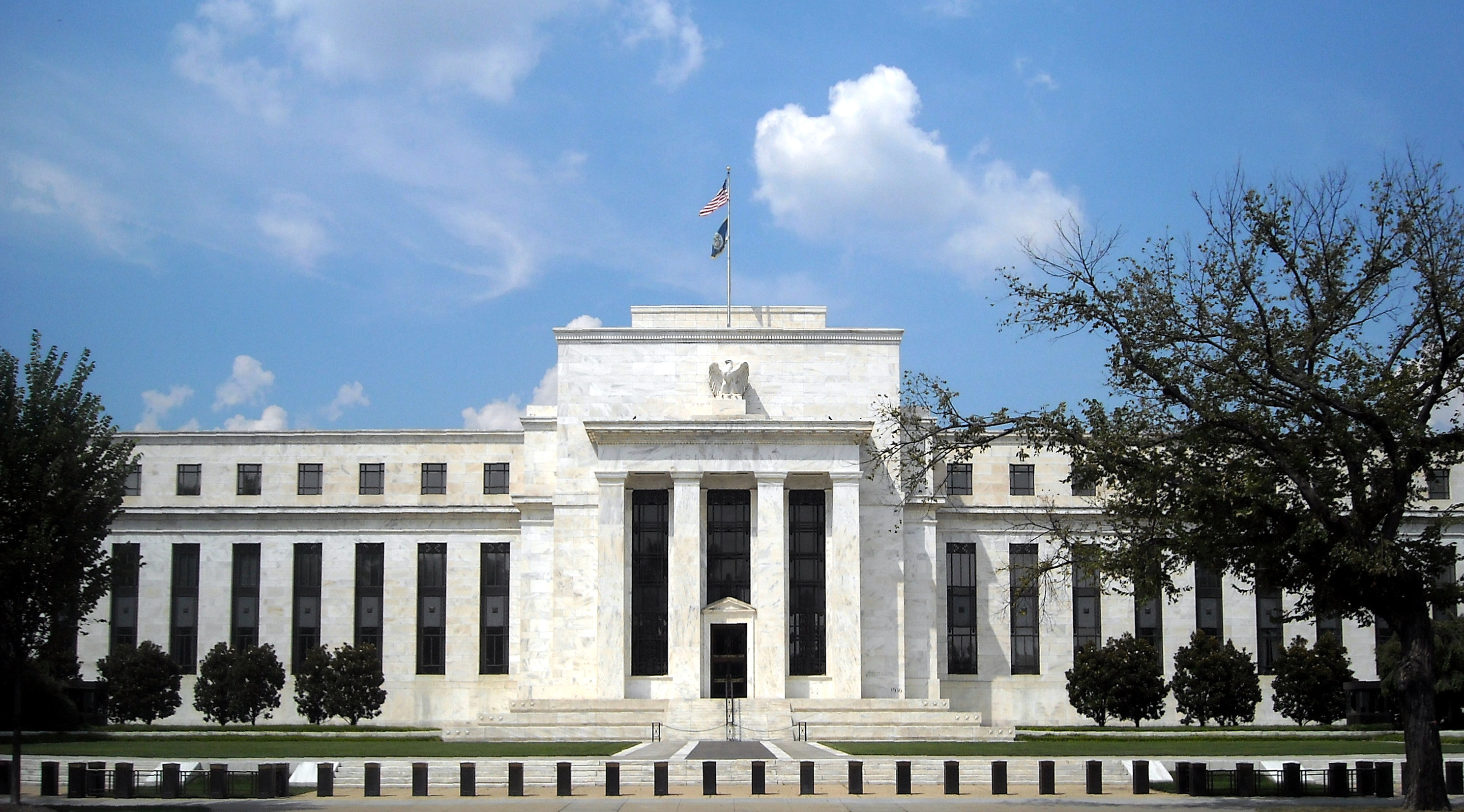
This is how I see things: no central body can ever have perfect knowledge of what’s happening in the economy and what the various plans, wishes and wants of the millions of actors in the system are (I am obviously not the first one to say this. See Mises, Hayek, Friedman and so many others). As a result, any central intervention is bound to fail or create distortions in the economic landscape.
Central banks are a monopoly: they define nominal interest rates and base money supply unilaterally and can only adjust their policies with a time lag, after they have already affected the economy. A distorting monetary policy can easily kickstart asset bubbles: an increasing supply of ‘high-powered’ money (base money) not matched by an increase in the demand for money can easily lead to excess credit creation. If real estate prices boom due to the flow of credit towards the sector, is it reasonable to try to stop it? The flow of credit is already here, and if it cannot go where it wanted in the first place, it will find another place to go to. China and its wealth management products is a good example of this process.
Let’s consider a current example in the UK. Due to a combination of interest rates maintained too low for too long, misguided government schemes such as Funding for Lending and Help to Buy, compounded by Basel regulations that favour mortgage lending and local restrictions on housing supply, if ever a housing bubble appears, the solution will be to… blame the banks and artificially restrict LTVs or cap lending??? Right…
Finance is a spontaneous process: people can be very innovative at finding ways of bypassing restrictions to achieve their desired financing and saving goals. Macroprudential controls would only move the problem from one sector to another, without correcting its very source. Macroprudential regulation would also introduce an unwelcome dose of discretionary rules and micromanagement, which have destabilising effects on trust, markets and economic actors.
Photograph: Wikipedia
News of Regulatory Capital importance
The European Banking Authority today published its new Basel 3 monitoring exercise of European Banks. For those of you who don’t know what Basel 3 is, it is the latest iteration of the global banking guidelines defined in Basel, Switzerland, which roughly covers minimum capital, liquidity and funding requirements that banks have to achieve by 2019. I’ll come back to the details in another post.

There is some partially good news. European banks seem to become more capitalised and more liquid. I have doubts regarding the process though, and I am not even questioning the centralised decision-taking in Basel, which I am evidently against. I am also against undercapitalised banks, but for other reasons.
No, what ‘worries’ me is the method that regulators used to push banks to recapitalise. The Basel accord asked banks to achieve balance sheet targets by 2019. Then came the EBA and other national regulators, who ‘stress-tested’ banks and almost publicly shamed them if they failed the tests. Now, the EBA proudly announces that pretty much all European banks will achieve capital and liquidity targets (“fully loaded Core Equity Tier 1 capital ratio”, “Liquidity Coverage ratio”…) five years ahead of schedule.
Hold on… Why even come up with a 2019 deadline in the first place then? The consequence of this is that banks have been under massive pressure to quickly ‘recapitalise’ in the middle of a European economic crisis, instead of doing it more progressively. This certainly did not help economic recovery, and we can also question the quality of the capital ratios achieved as a result.
Why? Many banks have tried to bolster their regulatory capital ratio and their liquidity by… reducing their balance sheet. Meaning? They decided to reduce lending, maintaining their capital base stable (or even declining!). Moreover, many banks are also playing with risk-weighted assets (RWAs). RWAs allow banks to apply a “weight” on a specific asset class according to the perceived risk of this class. For example, US debt is judged as risk-free and hence will carry a 0% weight, thereby allowing the bank to hold no capital against it to absorb potential losses.
Regulatory capital ratios are calculated this way: regulatory capital/RWAs. Regulatory capital comprises equity and “supplementary hybrid capital”, which lies in between equity and debt. The ratio is flawed: hybrid capital often does not adequately absorb losses and banks have an incentive to ‘arrange’ RWAs (lowering them to artificially increase the ratio). It happens frequently and I’ll get back to that another day. A clue to the fact that banks’ capitalisation might not be that good is the Basel 3 Leverage ratio. While we can criticise this leverage ratio on methodological grounds, it uses total assets and not RWAs on the denominator. Well, guess what? This ratio has not changed since the latest EBA review…
Another ‘good’ news, HSBC will hire 3000 more compliance staff this year, following a similar move by JPMorgan. Surely this is good news as it creates jobs? Not really. HSBC already employs 2000 compliance officers. Hiring so many people to deal with red tape instead of working in more productive activities represents a big economic loss.
 Spontaneous Finance
Recent Comments