Endogenous Money vs. the Money Multiplier (guest post by Justin Merrill)
(This is a guest post by Justin Merrill, an investment advisor in Fairfax, Virginia, who independently studies banking, free banking and monetary theory. He is also a media editor at freebanking.org and you can find some of its work here and here)
The proponents of the “New View”, especially Tobin and Gurley and Shaw, have been a large influence on me, but so has Leland Yeager. This discussion prompted me to reread Yeager’s work, “What are Banks?” and see if their views could be reconciled.
I believe the following to be true:
- Outside money is exogenous with a couple (Post-Keynesian) qualifications and also a “hot potato”.
- Inside money is endogenously created and subject to market forces.
- The reserve multiplier explanation should die a quick, painful death.
- Monetary policy does influence inside money creation through controlling expectations and liquidity, which affects banks’ cost of funds.
- Attempts to regulate inside money creation for “macro-prudential” purposes are folly because the problem is monetary policy. The only way to keep both money and credit harmonized is by allowing a natural rate of interest.
Framing the Discussion:
To be clear, what is being debated is the usefulness of the money multiplier model (MMM) and the endogeneity of money and how these are related. Someone (I think it was Julien) recently blogged that the pro-endo critics of the MMM are contradicting themselves because the model explicitly states that commercial banks create the majority of money. But this is not what the debate is. The debate is what limits the creation of money (reserve requirements or market forces) and if the textbook MMM is remotely accurate or even useful.
James Tobin and the “New View”:
I mostly agree with the new view. I believe that inside money is determined mostly by market forces and that banks compete with other financial intermediaries. They provide liquidity by optimally allocating society’s wealth between deposits and risk assets.
Where I disagree with the New View is when they go so far as to say that banks are pure intermediaries and not in anyway special. This overlooks the other functions of banks and also leads one to ask why banks exist at all when we could all just hold diversified financial assets with lower fees/higher yields? While these financial assets compete with bank deposits, they are not perfect substitutes. Banks’ liabilities are special and so are some other functions they provide.
Leland Yeager’s Monetarist view:
In Yeager’s essay, “What are Banks?”, he explicitly says that the broad money supply is exogenously controlled by the monetary authority. He argues that fluctuations in money demand don’t impact money supply, only the price level and nominal income.
Yeager thinks the old view, that reserves multiplied by reserve ratios determine the broad money supply, is correct. His most convincing argument is that banks will invest any excess reserves in marketable securities. One flaw in this particular argument is that the return on excess reserves isn’t just the opportunity cost of marketable securities, but also of lending to other banks, which is a usually higher rate than T-bills. One notable difference is that lending Federal Funds is an unsecured market while T-bills are “riskless” and this risk difference might explain some of the spread. The more recent innovation of interest on reserves also complicates the MMM explanation and has partially caused the Fed Funds market to dry up since implementation. If interbank lending rates or IOR are higher than the return of near perfect substitutes (marketable securities such as T-bills), the reserves will stay in the system.
Some Problems with the Money Multiplier Model:
The reason I want to see the MMM die a fast, painful death is because it abstracts away from real decisions of individuals involved in the market process and turns the entire banking system into a policy lever for bureaucrats to adjust.
One way we could attempt to settle the validity of the MMM is empirically. We could survey bank treasurers and ask them what their bottlenecks are, such as: costs of funding, lending opportunities, or reserve maintenance. In the US, banks report their regulatory reserve status every two weeks and have to maintain reserve requirements over the average of the period. This means that if a firm sees an outflow of reserves in week one, in week two they must retain a surplus to offset last week’s deficit.
We could also use macro data to try to verify if reserve requirements determine the money supply and if the banking system remains fully loaned up. I would rather challenge it with the following proposition: imagine a truly free banking system with no central bank and no special regulations. The outside money could be a commodity but that is irrelevant to my point. The point is that with no regulator to enforce reserve requirements, what determines the inside money supply? Some might answer that individual banks would determine their own reserve ratio and that would in aggregate set the money supply, but this begs the question because it doesn’t explain what the prudent bank treasurer is thinking when deciding on a ratio or even if they are thinking in terms of reserve ratios at all!
I suspect that the prudent bank treasurer is only tangentially thinking about reserve ratios in regards to net redemptions and that what they are really thinking about is maximizing profits. If they can make a loan at a risk adjusted rate that is higher than what they can borrow on the wholesale market, why wouldn’t they make a loan and borrow reserves? This kind of interbank lending usually has higher costs than interest paid on deposits so it is not the ideal source of funding, but if the marginal investment return is high enough, the treasurer will authorize the loan and borrow reserves until they can secure more “sticky” and affordable funding. One thing I noticed is that both sides of the debate, Tobin and Yeager, accuse the other side of assuming that banks are not profit maximizers. I suspect it is Yeager who is guilty because the New View actually incorporates marginal profit/loss into its analysis.
Checking accounts aren’t that interesting, or interest bearing. The textbook version explains that reserves create bank deposits without any specification between demand and time deposits. When Tobin was writing, both were subject to reserve requirements, if I’m not mistaken. Interest on checking accounts was also forbidden. My interpretation of Tobin’s point is that bank deposits compete with other financial assets, and should they be allowed to pay interest, will do so. Time deposits are a better characterization of Tobin’s point because they are held for their certainty and return, whereas demand deposits are for transactions.The MMM is still taught like it is the 1960’s even though we have financial liberalization and innovation. No longer do time deposits have interest ceilings, MMMFs are checkable, NOW accounts enable demand deposits to pay interest (and I think Dodd-Frank scrapped all prohibitions of interest on demand deposits), and maybe most importantly, time deposits are not subject to reserve requirements. So how do MMM proponents explain the supply and yield of time deposits, especially if savings accounts are still counted as money? This leads into a paradox that can only be countered with either a concession that the Fed doesn’t control M2, or only M1 is money, or maybe that the MMM should be abandoned.
A Final Note on Institutional Analysis:
Regulatory reserve requirements are an intervention, to be specific, a quota. Interventions only take effect if they are binding. The reason the MMM is insufficient is because it is a specific theory of money creation, not a general theory. Relying on the MMM is as naive as relying on minimum wage laws to explain labor market wages for unskilled labor. Some might argue that binding reserve requirements are required to create artificial scarcity and give a fiat currency a positive value, but I’m sufficiently convinced by Eugene Fama’s “Banking in the Theory of Finance” that the services rendered from money are sufficient to give it positive value so long as the issuer constrains the supply. I also believe that monetary policy can be effective (or destructive) absent reserve requirements. One final argument for reserve requirements is that someone needs to make the banks stay liquid enough to pay off depositors. This justification was codified at the national level under the National Banking Act of 1863 and was made obsolete with the creation of the Federal Reserve System. The central bank can offset a reserve drain and be the lender of last resort. Empirically, reserve requirements were an ineffective tool for regulating liquidity and theoretically may even contribute to panics, but that’s worthy of a different post altogether. I also plan on writing a more detailed post explaining the mechanics behind the reasoning that inside money is not a “hot potato”.
New research on finance and Austrian capital theories
Two brand new pieces of academic research have been published last month, directly or indirectly related to the Austrian theory of the business cycle (some readers might already know my RWA-based ABCT: here, here, here and here).
The first one, called Roundaboutness is Not a Mysterious Concept: A Financial Application to Capital Theory (Cachanosky and Lewin) attempts to start merging ABCT (or rather, Austrian capital theory) with corporate finance theory. The authors use the finance concepts of economic value added (EVA), modified duration, Macaulay duration and convexity in order to represent the Austrian concepts of ‘roundaboutness’ and ‘average period of production’. The paper provides a welcome and well-defined corporate finance background to the ABCT.
However, finance practitioners still don’t have the option to use a ‘full-Austrian’ alternative financial framework, as this paper still relies on some mainstream concepts. For instance, the EVA calculation for a given period t is as follows:

where ROIC is the return on invested capital, WACC the weighted average cost of capital and K the financial capital invested.
In order to compute the project’s market value added (MVA, i.e. whether or not the project has added value), it is then necessary to discount the expected future EVAs of each period t1, t2…, T, by the WACC of the project:

The WACC represents the minimum return demanded by investors to compensate for the risk of such a project (i.e. the opportunity cost), and is dependent on the interest rate level. The problem arises in the way it is calculated in modern mainstream finance. While the cost of debt capital is relatively straightforward to extract, the cost of equity capital is commonly computed using the capital asset pricing model (CAPM). Unfortunately, the CAPM is based on the Modern Portfolio Theory, itself based on new-classical economics and rational expectations/efficient market hypothesis premises, which are at odds with Austrian approaches.
(And I am not even mentioning some of the very dubious assumptions of the theory, such as “all investors can lend and borrow unlimited amounts at the risk-free rate of interest”…)
While it is easy for researchers to define a cost of equity for a theoretical paper, practitioners do need a method to estimate it from real life data. This is how the CAPM comes in handy, whereas the Austrian approach still has no real alternative to suggest (as far as I know).
Nevertheless, putting the cost of equity problem aside, the authors view the MVA as perfectly adapted to capital theory:
Note that the MVA representation captures the desired characteristics of capital-theory; (1) it is forward looking, (2) it focuses on the length of the EVA cash-flow, and (3) it captures the notion of capital-intensity.
Using the corporate finance framework outlined above, the authors easily show that the more capital intensive investments are the more they are sensitive to variations in interest rates (i.e. they have a larger ‘convexity’). They also show that more ‘roundabout’/longer projects benefit proportionally more from a decline in interest rates than shorter projects. Unsurprisingly, those projects are also the first ones to suffer when interest rates start going up.
The following chart demonstrates the trajectory of the MVA of both long time horizon (high roundabout – HR) and short time horizon (low roundabout – LR) projects as a function of WACC.

Overall, this is a very interesting paper that contains a lot more than what I just described. I wish more research was undertaken on that topic though.
The second paper, pointed by Tyler Cowen, while not directly related to the ABCT, nonetheless has several links to it (I am unsure why Cowen thinks this piece of research actually reflects the ABCT). What’s interesting in this paper is that it seems to confirm the link between credit expansion, financial instability and banks stock prices, as well as the ‘irrationality’ of bank shareholders, who do not demand a higher equity premium when credit expansion occurs (which doesn’t seem to fit the rational expectations framework very well…).
The obsession of stability
One of the outcomes of the financial crisis has been that regulators are now obsessed with instability. Or stability. Or both.
They have been on a crusade to eliminate the evil risks to ‘financial stability’, and nothing seems to be able to stop them (ok, not entirely true). Banks, shadow banking, peer-to-peer lending, crowdfunding, private equity, payday lenders, credit cards…
Their latest target is asset managers. In a new speech at London Business School, Andrew Haldane, a usually ‘wise’ regulator, seems to have now succumbed to the belief that regulators know better and have the powers to control and regulate the whole financial industry (see also here). This is worrying.
Haldane now views every large asset manager as dangerous and many investment strategies as potentially amplifying upward or downward spiral in asset prices, representing ‘flaws’ in financial markets that regulators ought to fix. I believe this is strongly misguided.
In their quest to cure markets from any instability, regulators are annihilating the market process itself. I would argue that some level of instability is not only necessary, but is also desirable.
First, instability reflects human action; the allocation of resources by investors and entrepreneurs. Some succeed, some fail, prices go up, prices go down, everybody adapts. Sometimes many, too many, investors believe that a new trend is emerging, indeed amplifying a market movement and subsequently leading to a crash. But crashes and failures are part of the learning process that is inherent to any capitalist and market-based society. Suppress or postpone this process and don’t be surprised when very large crashes occur. On the other hand, an unhampered market would naturally limit the size of bubbles and their subsequent crashes as market actors continuously learn from their mistakes.
Second, instability enhances risk management. Instability is necessary because it induces fear in markets participants’ behaviour, who then take risks more seriously. By suppressing instability, regulators would suppress risk assessment and encourage risky behaviours: “there is nothing to fear; regulators are making sure markets are stable.” The illusion of safety is one of the most potent risks there is.
Nevertheless, regulators, on their quest for the Holy Grail of stability, want to regulate again and again. On the back of flawed instability or paternalistic consumer protection arguments, and despite seemingly showing poor understanding of financial industries, they are trying to implement regulations that would at best limit, at worst dictate, market actors’ capital allocation decisions. Adam Smith would turn in his grave (along with his invisible hand, who is now buried next to him).
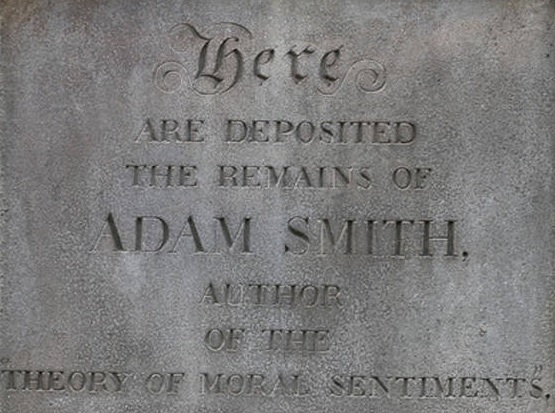
In the end, regulators’ obsession for stability and protection creates even stronger systemic risks. In fact, the only ‘stable’ society is what Mises called the evenly-rotating economy, the one that never experiments. Nothing really attractive.
Funny enough, in his speech, Haldane even acknowledged regulation as one of the reasons underlying some of the current instability:
Risk-based regulatory rules can contribute further to these pro-cyclical tendencies. […]
There have been several incidences over recent years of regulators loosening regulatory constraints to forestall concerns about pro-cyclical behaviour in a downswing. […]
In particular, regulation and accounting appear to have played a significant role.
I guess he didn’t get the irony.
Mobile banking keeps growing, payday lenders perhaps not so much anymore
The Fed published last week a new mobile banking survey in the US. Here are the highlights: 33% of all mobile phone owners have used mobile banking over the past twelve months, up from 28% a year earlier. When only considering smartphones, those figures increased to 51% and 48% respectively, with 12% of mobile users who plan to move on to mobile banking soon. 39% of the ‘underbanked’ population used mobile banking over the period. Checking balances, monitoring transactions and transferring money are the most common activities.
Still more than half of mobile users who do not currently use mobile banking are reluctant to use it in the future though. But usage is correlated with age. 18 to 29yo users represent 39% of all mobile banking users but only 21% of mobile phones users, whereas 45 to 60yo represent 27% of mobile banking users but 53% of mobile users. I am indeed not surprised by those results, and, as I have described in a previous post, as current young people age, the bank branch will slowly disappear and mobile banking become the norm. (Bloomberg published an article on the end of the bank branch yesterday)
That the underbanked naturally benefit from mobile banking isn’t surprising, and isn’t new at all. The widespread use of the M-Pesa system in Kenya rested on the fact that a very large share of the population had no or limited access to banking services. However, some African countries with slightly more developed banking systems are resisting the introduction of mobile money in order not to interfere with the business as usual of the local incumbent banks. Another case of politicians and regulators acting for the greater good of their country. Anyway, mobile money/banking is now instead making its way to… Romania, as almost everyone there owns a mobile phone but more than a third of the population does not have access to conventional banking.
Meanwhile, in the UK, the regulators are doing what they can to clamp down on payday lenders. As I have described in a previous post, the result of this move is only likely to prevent underbanked people from accessing any sort of credit, as other regulations seriously limit mainstream banks’ ability to lend to those higher-risk customers.
Here again, the Fed mobile banking survey is quite enlightening. They asked underbanked people their reasons for using payday lenders. Here are their answers:


Right… So what are the consequences when you prevent people from temporarily borrowing small amount of cash that their bank aren’t willing to provide and who need it to pay for utility bills or buying some food or for any other emergency expenses? It looks like regulators believe that those families would indeed be better off not being able to pay their water bills.
Of course, over-borrowing is an issue (as are abuse and fraud), but regulators are merely clamping down on symptoms here. Society is confronted with a dilemma: either those households are unable to pay their bills or buy enough food, or they might face over-indebtedness… None of those two options are attractive. But in such a situation, it is customers’ responsibility to choose. If they can avoid payday lenders, so they should. If they really can’t, this option should remain on the table. Sam Bowman from the Adam Smith Institute made very good comments on BBC radio Wales earlier today (see here from 02:05:00) on this topic.
I know I am repeating myself, but you cannot regulate problems away.
More inside/outside money endogeneity confusion
I was surprised by a Twitter discussion yesterday that linked to this good post by David Beckworth. As you can guess, the topic once again involved the endogeneity of money. Beckworth’s answer to an interview question was:
My answer was that inside money creation–money created by banks and other financial firms–is endogenous, but the Fed shapes in an important way the macroeconomic environment in which money gets created.
David is right. But what I do find surprising is that his interviewer could ask such question as “do you believe that money is endogenously created?”
Let’s clarify something: the fractional reserve banking/money multiplier model necessarily implies endogenous creation of bank inside money. It describes how banks multiply the money supply from a small amount of externally-supplied reserves. If this isn’t endogenous creation, I have no idea what this is. I don’t think anybody who accepts that model ever denied that fact.

The recent debate wasn’t about whether bank inside money was endogenously created but about whether or not the monetary base (i.e. outside money, or bank reserves) was also endogenously created. This is not at all the same thing and has very different implications altogether.
If the monetary base is endogenously created, the central bank cannot control the money supply, as MMTers and some post-Keynesians believe. I believe this is not the case, as highlighted in my various post (see here, here and here for examples).
However, if bank inside money is endogenously created and outside money exogenously created, this can only mean one thing: banks’ inside money creation ability is exogenously constrained by the amount of outside money in the system (though other factors also come into play).
This has always been the essence of the fractional reserve banking/money multiplier model. Model that has been severely misinterpreted recently, as Scott Sumner pointed out in a very recent post:
He [David Glasner] seems to believe multiplier proponents viewed it as a constant, which is clearly not true. Rather they argued the multiplier depends on the behavior of banks and the public, and varies with changes in nominal interest rates, banking instability, etc.
I can’t say how much I agree with Scott here, and this is exactly what I said in a recent post:
In their attempt to attack the money multiplier theory, they mistakenly say that the theory assumes a constant ratio of broad money to base money. There is nothing more wrong. What the money multiplier does is to demonstrate the maximum possible expansion of broad money on top of the monetary base. The theory does not state that banks will always, at all times, thrive to achieve this maximum expansion. I still find surreal that so many clever people cannot seem to understand the difference between ‘potentially can’ and ‘always does’.
A system in which there would be no money multiplier would effectively be a 100%-reserve banking system.
What’s interesting is that many proponents of the ‘uselessness’ of the money multiplier seem to have tone down their criticisms recently. Frances Coppola went from “the money multiplier is dead” to “it is improperly taught” (my paraphrasing)…
PS: when in my various posts I refer to (and say that I don’t believe in) the endogeneity of money, I refer to outside money/monetary base/high-powered money/reserves/whatever you want to call it, as I take inside money endogeneity for granted (with constraints, as already explained).
A central banker contradiction?
Last week, Mark Carney, the governor of the Bank of England, was at Cass Business School in London for the annual ‘Mais Lecture’. Coincidentally, I am an alumnus of this school. And I forgot to attend… Yes, I regret it.
Carney’s speech was focused on past, current, and future roles of the BoE. In particular, Carney mentioned the now famous monetary and macroprudential policies combination. It’s a classic for central bankers nowadays. They all have to talk about that.
In January, Andrew Haldane, a very wise guy and one my ‘favourite’ regulators, also from the BoE, made a whole speech about the topic. As Jens Weidmann, president of the Bundesbank, did in February.
I am not going to come back to the all the various possible problems caused and faced by macroprudential policies (see here and here). However, there seems to be a recurrent contradiction in their reasoning.

This is Carney:
The transmission channels of monetary and prudential policy overlap, particularly in their impact on banks’ balance sheets and credit supply and demand – and hence the wider economy. Monetary policy affects the resilience of the financial system, and macroprudential policy tools that affect leverage influence credit growth and the wider economy. […]
The use of macroprudential tools can decrease the need for monetary policy to be diverted from managing the business cycle towards managing the credit cycle. […]
That co-ordination, the shared monitoring of risks, and clarity over the FPC’s tools allows monetary policy to keep Bank Rate as low as necessary for as long as appropriate in order to support the recovery and maintain price stability. For example expectations of the future path of interest rates – and hence longer-term borrowing costs – have not risen as the housing market has begun to recover quickly.
First, it is very unclear from Carney’s speech what the respective roles of monetary policy and macroprudential policies are. He starts by saying (above) that “monetary policy affects the resilience of the financial system”, then later declares “macroprudential policy seeks to reduce systemic risks”, which is effectively the same thing. At least, he is right: both policy frameworks overlap. And this is the problem.
This is Haldane:
In the UK, the Bank of England’s Monetary Policy Committee (MPC) has been pursuing a policy of extra-ordinary monetary accommodation. Recently, there have been signs of renewed risk-taking in some asset markets, including the housing market. The MPC’s macro-prudential sister committee, the Financial Policy Committee (FPC), has been tasked with countering these risks. Through this dual committee structure, the joint needs of the economy and financial system are hopefully being satisfied.
Some have suggested that having monetary and macro-prudential policy act in opposite directions – one loose, the other tight – somehow puts the two in conflict [De Paoli and Paustian, 2013]. That is odd. The right mix of monetary and macro-prudential measures depends on the state of the economy and the financial system. In the current environment in many advanced economies – sluggish growth but advancing risk-taking – it seems like precisely the right mix. And, of course, it is a mix that is only possible if policy is ambidextrous.
Contrary to Haldane, this does absolutely not look odd to me…
Let’s imagine that the central bank wishes to maintain interest rates at a low level in order to boost economic activity after a crisis. After a little while, some asset markets start looking ‘frothy’ or, as Haldane says, there are “renewed signs of risk-taking.” Discretionary macroprudential policy (such as increased capital requirements) is therefore utilised to counteract the lending growth that drives those asset markets. But there is an inherent contradiction here: one of the goals that low interest rates try to achieve is to boost lending growth to stimulate the economy…whereas macroprudential policy aims at…reducing it. Another contradiction: while low interest rates tries to prevent deflation from occurring by promoting lending and thus money supply growth, macroprudential policy attempts to reduce lending, with evident adverse effects on money supply and inflation…
Central bankers remain very evasive about how to reconcile such goals without entirely micromanaging the banking system.
I guess that the growing power of central bankers and regulators means that, at some point, each bank will have an in-house central bank representative that tells the bank who to lend to. For social benefits of course. All very reminiscent of some regions of the world during the 20th century…
Weidman is slightly more realistic:
We have to acknowledge that in the world we live in, macroprudential policy can never be perfectly effective – for instance because safeguarding financial stability is complicated by having to achieve multiple targets all at the same time.
Indeed.
Photograph: Intermonk
Crowdfunding, naivety and scandals
John Kay wrote an interesting article for the FT yesterday, titled “Regulators will get the blame for the stupidity of crowds.” He argues that, despite crowdfunding and P2P enthousiasts blaming regulators for being too slow and too cautious, this new market will eventually crash and trigger calls for more advanced regulation as well as the setup of compensation schemes. Desintermediation firms would then reintermediate lending and effectively transform into… banks.
I partly agree with Kay. A collapse/crash/losses/fraud/scandals is/are inevitable. And this is a good thing.
I have already written about the importance of failure in free market financial systems. New financial innovations need to experience failures in order to end up reinforced, to distinguish what works from what doesn’t work. This is a Darwinian learning process. The system then becomes ‘antifragile’. Consequently, the state should refrain from intervening in order not to postpone this necessary learning process and resulting adjustments. When crowdfunding crashes, the state should resist any call for intervention/bailout/regulation. This is the only way crowdfunding can become a mature industry.
I however also partly disagree with Kay, who I believe does not see the bigger picture.
Kay argues that investors (in this case ‘crowds’) are naïve. That intermediation has benefits and non-professional investors lack the ‘cynicism’ to assess the risk/reward profile of those investments.
Where Kay is wrong though, is in considering P2P lending as “a substitute for deposit account.” It is not. P2P lending is an investment. Unsophisticated retail investors can also lose much of their money by investing in various stocks. Or by betting on the wrong horse. I don’t believe investors mistake crowdfunding for bank deposits…
I think that what Kay also fails to see is that, if historically many start-ups and young SMEs have struggled to grow and eventually failed, it is partly because they lacked the funds required to grow. Some start-ups ended-up collapsing or selling themselves to larger competitors simply because funding became scarce at the second or third round of funding. This funding gap was particularly prevalent in some markets such as the UK (less so in the US). Some other markets, such as France, on the other hand, lack first round financing (seed funding, mainly provided by ‘Angel’ investors).
When the supply for loanable funds is scarce relative to the demand, demanded return on investment is high. Many new firms, particularly in non-growth markets, find it hard to cope with this situation and are pretty much avoided by venture capital investors. What equity crowdfunding and P2P lending do is to increase the supply of loanable funds, reducing the average required rate of return. Refinancing risk mechanically recedes, guaranteeing the success or the failure of an SME on its business strategy and execution alone.
In addition, crowdfunding multiply investment opportunities, making it easier to diversify a portfolio of investments. Historically, venture capital funds could not diversify too much if they wanted to maintain appropriate levels of returns.
Scandals are inevitable, but the learning mechanism inherent to the market process must be allowed to run its course. Learning, combined with the increased supply of loanable funds, would reduce the probability of scandals occurring in the long-run and make crowdfunding a solid industry.
Tobin vs. Yeager, my view
I really hesitated to write this post. For the last 10 days my blogging frequency has been close to nil as I re-read and gave a thought to James Tobin’s Commercial Banks as Creators of Money, Leland Yeager’s What are Banks, as well as several blog posts, including David Glasner’s (here, here and here). In the end, it looked to me that everything that could be said had already been said. But I’ve been asked to provide my opinion. Moreover, I believe that most of what has been said so far derived from economists’ point of view (which doesn’t mean this is wrong per se) and that a financial analyst/practitioner could potentially bring useful points to the debate.
As I said, I’ve been asked to provide my opinion. Let me give you a quick answer. I believe that both Tobin’s New View and Yeager’s Old View (?) are right. I also believe they are both wrong. Some of their arguments are true. Some others seem to contradict other points they make.

I believe that banks’ expansion is indeed limited by economic constraints. Perhaps just not the exact ones Tobin was thinking of. I also believe banks can and usually indeed do fully ‘loan up’. But perhaps not exactly the way Yeager was seeing it as I believe that reserve requirements (in particular, internally-defined ones, see below) are part of banks’ economic constraints.
A lot of the discussion surrounding the debate in the economic area/blogosphere rests on the nature of bank inside money and whether it is subject to the ‘hot potato’ effect. This is very clear in David Glasner’s posts. I encourage you to take a look at them (including their comment sections) although this can be a little technical for non-economists. But here I am going to take a slightly different approach, more finance theory-based.
First, I don’t believe in Tobin’s arguments that demand deposits’ yields are key. Tobin says:
Given the wealth and the asset preferences of the community, the demand for bank deposits can increase only if the yields of other assets fall. […] Eventually, the marginal returns on lending and investing, account taken of the risks and administrative costs involved, will not exceed the marginal cost to the banks of attracting and holding additional deposits.
I don’t know anyone who keeps his/her money in demand deposit accounts because of their yield (by ‘demand deposit’ I mean checkable deposits, not saving deposits available on demand, this is an important distinction). People maintain real balances in demand deposits to cover their cost of living (i.e. expected cash outflows over a given month). Here, on the ‘hot potato’ issue, I side with Yeager. Demand deposits provide a convenience yield. Nominal yields are pretty much unimportant. It is only when banks’ customers have surplus balances in their account that yields become important in the choice between using them for consumption or investment (and to pick the type of investment). But this does not concern demand deposits. It is hard to imagine anyone transferring most (or all) of his money from a demand to a saving account (or any other sort of investment) for yield purposes…
In addition, banks always pay close to nothing on demand deposits. In order to grow their deposit base, banks barely vary rates on demand deposits. Saving accounts and related financial products (retail bonds, certificates of deposit, etc.) that are not media of exchange are the ones used by banks to attract customers.
But the Tobin/Yeager debate focuses on demand deposits due to their very nature. And there seems to be some confusion in both Tobin’s article and Glasner’s posts. Tobin explicitly refers to demand deposits, and how competition from non-bank FIs would push up their interest rates. This is unlikely as described above. Saving deposits would be the ones to suffer. But they are not media of exchange and not the topic of the discussion. As a result, I find myself in general agreement with Bill Woolsey, who commented on Glasner’s posts.
Second, Tobin seems to downplay the role of reserve requirements. What he fails to see is that they also are part of banks’ economic constraints. He also contradicts himself when he declares that reserve requirements are only a legal constraint that kicks in before natural economic constraints prevent the bank from expanding, only to say a few pages later that reserves…aren’t a constraint on lending (which I believe is wrong as I have already said many times).
Some readers already know the simple bank accounting profit equation I referred to in a couple of previous posts:
Net Profit = Interest Income from lending – Interest Expense from deposits – Operational Costs
Let’s now move on to a slightly more complex version.
In the short-term, banks survive by making accounting profits. However, in the long-term, banks survive by making economic profits (= at least covering their cost of capital). And, unlike accounting-based financial statements, the cost of capital incorporates risk.
The risk I am particularly interested in today, and which is the most relevant for the Tobin/Yeager debate is liquidity risk. Let’s now modify the profit equation using White’s The Theory of Monetary Institutions. A bank’s economic profit equation thus becomes:
Economic Profit = II – IE – OC – Q, where Q represents liquidity cost.
Liquidity cost isn’t a ‘tangible’ cost and is therefore excluded from a bank’s accounting profit. Nevertheless, the less liquid a bank becomes, the riskier it becomes, and investors demand as a result appropriate compensation for bearing that extra risk, reflected in a higher demanded return on capital. Eventually, liquidity cost can also impact accounting profitability through higher cost of funding (i.e. interest expense).
Why I am referring to liquidity risk? Because liquidity risk becomes a direct economic constraint on bank expansion. Individual banks maintain a liquidity buffer to face redemptions and interbank settlements. The traditional view is that reserves play this role, through the exogenously-defined reserve requirements. Without them, banks would turn ‘wild’ and become way too risky. This view is inaccurate.
Indeed, banks in free banking systems during the 19th century used to maintain a high level of reserves, despite the absence of reserve requirements (though this level used to vary with technological advancement and demand for banks’ liabilities). With the development of capital markets, banks found another solution: swap some of their reserve holdings for highly-marketable and high quality securities, which effectively became reserve-replacements, or claims on reserves.
In order to maximise economic profitability, modern banks now usually maintain their (primary) reserves to a minimum while also holding secondary reserves (that is, in a non-interest on excess reserves world). In a way, banks are never fully loaned-up. From a primary reserves point of view, they indeed are. From a total reserves point of view, they are not. Banks sacrifice higher yields on loans for lower yields on safe and liquid securities. However, I have to admit that, from a risk-adjusted point of view, banks could be considered fully loaned-up*.
Seen that way, Tobin was right to believe that economic constraints would prevent bank expansion, but was wrong in believing that reserve requirements merely prevented the expansion from reaching its natural economic limits and that banks’ special status was only derived from this legal restriction**:
In a régime of reserve requirements, the limit which they impose normally cuts the expansion short of this competitive equilibrium. […] In this sense it is more accurate to attribute the special place of banks among intermediaries to the legal restrictions to which banks alone are subjected than to attribute these restrictions to the special character of bank liabilities.
If anything, economic constraints kick in before reserve requirements***, and internally-defined reserve requirements are part of economic constraints.
On the other hand, Yeager sometimes seems to overstate the effects of reserve requirements and underplay economic constraints in limiting expansion:
Proponents of this view are evidently not attributing “the natural economic limit” to limitation of base money and to a finite money multiplier, for that would be old stuff and not a new view. Those familiar limitations operate on the supply-of-money side, while the New Viewers emphasize limitations on the demand side.
To be fair, Yeager’s exact point of view isn’t entirely clear in his article. He seems to reject the ‘natural economic limits’ only to later endorse them, though this might be due to the facts he does not view liquidity cost as an economic constraint in his reasoning:
It is hard to imagine why a bank might find it more profitable to hold reserves in excess of what the law and prudence call for than to buy riskless short-term securities with them.
I also partially disagree with Yeager’s point that “the real marginal cost of expanding the system’s nominal size is essentially zero.” This is true… in the long run. But in the short-term extending credit often involves growing operational costs (i.e. hiring further loan officers for example), which weigh on banks’ accounting profitability in real terms, and growing liquidity costs, which weigh on banks’ economic profitability, before the nominal size of the system is finally expanded.
I might be missing something, but the ‘hot potato’ effect of banks’ inside money and the natural economic constraints on banks expansion do not look irreconcilable to me. This is also the view that White seems to take in his book. Furthermore, only this view seems to be able to explain the behaviour of free banks. Banks loan up to a degree that maximise economic profitability (which includes safety/risk) but any exogenous increase in reserves can also bring about an expansion of banks’ inside money (money multiplier effect) that results in a new nominal paradigm.
It’s funny but I have the feeling that this debate will make me think for much longer.
** In addition, the margin between interest income and interest expense isn’t the only way to generate revenues. In fact, many banks accept to extend credit to customers at a loss, in order to generate profits through cross-selling of other financial products (derivatives, insurance, clearing and custody services…). This effectively pushes back the economic limits of expansion (without taking account liquidity cost). A traditional (i.e. non-IB) bank’s economic profit equation would then become:
Economic Profit = II – IE + CS – OC – Q, where CS represents revenues from cross-selling.
*** Some of you might believe that this is in contradiction with my claim that reserve requirement policies have been successfully implemented in various countries. It isn’t. Primary reserves that are not in excess are essentially ‘stuck’ at the central bank. As banks fully ‘loan-up’ on them, increasing reserve requirements merely reduce lending expansion unless banks decide to slash their secondary reserves (which essentially replace excess reserves), which would in turn increase liquidity cost.
The Economist on Bitcoin (and some weird claims)
The Economist has two interesting articles on Bitcoin this week (here and here), as well as a blog entry (here). Coloured coins and the potential development (and other uses) of Bitcoin’s technology are mentioned.
But two of the articles make very strange (if not outright wrong) claims in order to criticise some of the principles underlying Bitcoin. One considers the inherent deflationary effect of Bitcoin as being a limitation on the ability of the currency to become mainstream. The article once again seems to miss the difference between good and bad deflation. For sure, this differentiation wasn’t mainstream until recently and is still not accepted by many mainstream economists (see one of the latest examples here). Still, introducing some nuance in its articles wouldn’t hurt the newspaper. In addition, the Economist makes claims such as:
A modicum of inflation greases the system by, in effect, cutting the wages of workers whose pay cheques fail to keep pace with inflation.
Don’t they see the problem with this sentence? Inflation fuelling inflation anyone?
In the blog post, Ryan Avent also makes a very inaccurate claim:
What’s more, the idea that modern central banks with their loosey-goosey printing presses have generated an epidemic of inflation is a little nuts; if anything, rich-world central banks have become too effective at protecting the value of their respective currencies.
Really? According to research by Selgin and White, the dollar has lost most of its value since the Fed was set up (whereas the value remained relatively stable over the previous century, though with short-term large fluctuations). (although it is possible that Ryan only refers to the last few years)

While I agree that Bitcoin isn’t perfect, its critics will have to find other angles of attack.
The BoE says that money is endo, exo… or something
The Bank of England just published an already very controversial paper, titled “Money creation in the modern economy”. Scott Sumner, Nick Rowe, Cullen Roche, Frances Coppola, JKH, and surely others have already commented on it. Some think the BoE is wrong, some, like Frances, think that this confirms that “the money multiplier is dead”. Some think that the BoE endorses an endogenous money point of view. Many are actually misreading the BoE paper.
To be fair, this might not even be an official BoE report, and might only reflect the views of some of its economists. That type of paper is published in many institutions.
I am unsure what to think about this piece… They seem to get some things right and some other things wrong, and even in contradiction to other things they say. Overall, it is hard to reconcile. What I read was a piece written by economists. Not by banks analysts or market participants. Therefore, some ‘ivory tower’ ideas were present, though in general the paper was surprisingly quite realistic.
I have also been left with a weird feeling. I might be wrong, but almost the whole ‘Limits on how much banks can lend’ section really seems to be paraphrasing my two relatively recent posts on the topic (here, where I criticise the MMT version of endogenous money theory, and here, where I respond to Scott Fullwiller). The paper does say that
The limits to money creation by the banking system were discussed in a paper by Nobel Prize winning economist James Tobin and this topic has recently been the subject of debate among a number of economic commentators and bloggers. (emphasis added)
Indeed…
Contrary to what some seem to believe, the BoE does not endorse a fully endogenous view of the monetary system, and certainly not an MMT-type endogenous money theory.
Let me address point by point what I think they got wrong or contradictory (I am not going to address the points in the QE section, which simply follow the mechanism described in the first section of the paper).
- First, there seems to be an absolute obsession with differentiating the ‘modern’ from the ‘pre-modern’ banking and monetary system. The paper keeps repeating that
in reality, in the modern economy, commercial banks are the creators of deposit money. (page 2)
Well… You know what, guys? It was already the case in the pre-fiat money era… Banks also created broad money on top of gold reserves, thereby creating deposits, the exact same way they now do it on top of fiat money reserves. The only difference is the origins of the reserves/monetary base.
- They very often refer to Tobin’s ‘new view’. But they never mention Leland Yeager, who strongly criticised Tobin’s theory in his article ‘What are Banks?’ As a result, their view is one-sided.
- The point that “saving does not by itself increase the deposits or ‘funds available’ for banks to lend” (page 2) is slightly misinterpreted. By not saving, and hence, consuming, customers are likely to maintain higher real cash balances, leading to a reserve drain. Moreover, even if no reserve drain occurs, banks end up with a much less stable funding structure, that does not make it easier to undertake maturity transformation. It is always easier to lend when you know that your depositors aren’t going to withdraw their money overnight. This is also in contradiction with their later point that
banks also need to manage the risks associated with making new loans. One way in which they do this is by making sure that they attract relatively stable deposits to match their new loans, that is, deposits that are unlikely or unable to be withdrawn in large amounts. This can act as an additional limit to how much banks can lend. (page 5)
- In their attempt to attack the money multiplier theory, they mistakenly say that the theory assumes a constant ratio of broad money to base money (page 2). There is nothing more wrong. What the money multiplier does is to demonstrate the maximum possible expansion of broad money on top of the monetary base. The theory does not state that banks will always, at all times, thrive to achieve this maximum expansion. I still find surreal that so many clever people cannot seem to understand the difference between ‘potentially can’ and ‘always does’. Moreover, the BoE economists once again contradict themselves, when on pages 3 and 5 to 7 they essentially describe a pyramiding system akin to the money multiplier theory!
- The paper also keeps mistakenly attacking the money multiplier theory and reserve requirements while entirely forgetting all the successful implementations of reserve requirement policies by central banks throughout the world (China, Turkey, Brazil…).
- The ‘banks lend out their reserves’ misconception is itself misconceived. I strongly suggest those BoE economists to read my recent post on this very topic. Here again this is in opposition with their later point that individual banks can suffer reserve drains and withdrawals through overlending…
- The ‘Limits on how much banks can lend’ section is very true (though I might be biased given how similar to my posts this section is), and I appreciate the differentiation between individual banks and the system as a whole, differentiation that I kept emphasizing in my various posts and that I believe is absolutely crucial in understanding the banking system. Nonetheless, while their description of the effects of over-expanding individual banks and what this implies for broad money growth is accurate, it is less so in regards to the system as a whole. Indeed, they seem to believe that all banks could expand simultaneously, resulting in each bank avoiding adverse clearing and loss of reserves. This situation cannot realistically occur. Each bank wishes to have a different risk/return profile. As a result, banks with different risk profile would not be expanding at the exact same time, resulting in the more aggressive ones losing reserves at the expense of the more conservative ones in the medium term, stopping their expansion. At this point, we get back to the case I (and they) made of what happens to over-expanding single banks.
- Finally, despite describing a banking system in which lending is built up on top of reserves (pages 3 and 4) and in which banks cannot over-expand due to reserve drains (pages 5 and 6), they still dare declaring that:
In reality, neither are reserves a binding constraint on lending, nor does the central bank fix the amount of reserves that are available. (page 2) (emphasis added)
I just don’t know what to say…
What do we learn from this piece? For one thing, those BoE economists do not believe in the endogenous money theory. This is self-explanatory in the mechanism described in pages 5 and 6. They clearly know that an individual bank cannot expand broad money by itself. They seem to admit that the central bank does not have the ability to provide reserves on demand (despite saying a couple of times that the BoE supplies them on demand, another apparent contradiction). Their only qualification is that this can happen when all banks simultaneously expand their lending. This is theoretically true but impossible in practice as I said above.
Why would the central bank not have the ability to provide those reserves on demand? Actually, it can. It’s just that there is no (or low) demand for those reserves. This is due to the central bank funding stigma, an absolutely key factor that is not referred to even once in this BoE paper. As a result, their description seems to lack something: if individual banks lack reserves to expand further, why aren’t they simply borrowing them from the central bank? By overlooking the stigma, their mechanism lacks a coherent whole.
This is how things work (in the absence of innovations that economise on reserves): money supply expansion is endogenous in the short-term. But any endogenous expansion will also lead to an endogenous contraction in the short-term. In the long-term, only an increase in the monetary base can expand broad money. Only central bank injections free of any stigma, such as OMO, can sustainably expand the monetary base by swapping assets for reserves without touching at banks’ funding structure.

I have a minor qualification to add to this mechanism though. The endogenous contraction does not necessarily always occur around the same time. A period of economic euphoria could well lead to lower risk expectations, allowing banks to reshape their funding structure and the liquidity of their balance sheet in a riskier way than usual before the natural contractionary process kicks in.
In the end, the few ‘ivory tower’ ideas that are present in this research paper make it look incoherent and internally inconsistent. Central banks are notorious for their intentional or unintentional twisting of economic reality and history (see this brand new article by George Selgin on the Fed misrepresenting its history and performance. Brilliant read), so we should always take everything they say with a pinch of salt.
 Spontaneous Finance

Recent Comments